

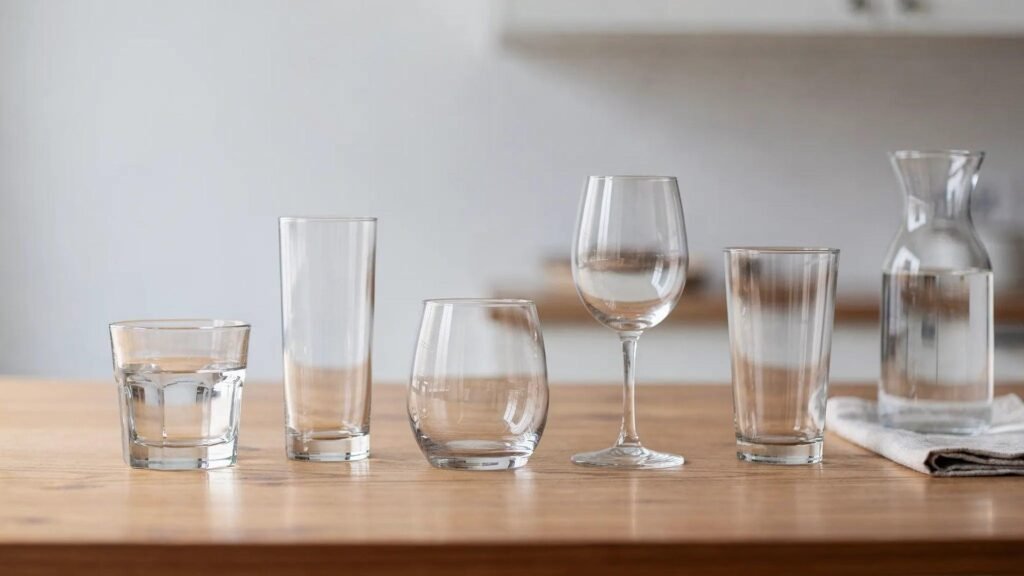
Clear drinking glasses are a versatile choice for beverage brands, restaurants, hospitality businesses and homeware retailers. While transparent glass offers a simple and timeless appearance, the shape of the cup can make a significant difference to its overall presentation and everyday usability.
The linked product assortment shows different glass profiles. Use it to shortlist a design, then request a written specification and sample for that exact reference. A pictured style does not establish available sizes, materials or finishes.
1. Different Glass Shapes for Different Applications
The shape of a drinking glass influences how it looks, feels and fits into a product collection. Even when two glasses use the same transparent material, differences in height, width, rim and base can create distinct visual styles.
When comparing different glass cup designs, buyers should consider the following:
- Straight-sided glasses: A clean, simple profile suitable for everyday drinkware collections.
- Curved glasses: Softer contours can create a more distinctive appearance.
- Wide-mouth glasses: A broader opening may be suitable for drinks served with ice or fruit.
- Tapered glasses: A narrower or wider profile can change the overall proportions and presentation.
The most suitable shape depends on the intended beverage, target customers and brand positioning. Buyers should identify the exact design they want from the available assortment before confirming specifications.
2. Custom Capacity and Dimensions
Capacity is one of the first specifications to confirm when developing custom drinking glasses. A glass designed for water or juice may require different proportions from one intended for specialty beverages or hospitality service.
Ask which capacity and dimension options are available for the selected design. Distinguish an existing mould from a proposed new design, and confirm feasibility, tooling costs and the approval process before treating a target size as an order specification.
| Detail | Sample check |
|---|---|
| Capacity | Intended beverage volume |
| Height | Overall proportions and handling |
| Diameter | Opening size and drinking comfort |
| Weight | Handling and product positioning |
| Rim design | Shape, thickness and finishing |
| Base design | Stability and visual proportions |
These details should be checked against a physical sample and written specification. In particular, buyers should confirm the exact capacity and measurements of each selected glass design rather than assuming that all styles in an assortment share the same specifications.
3. Why Clear Glass Remains a Versatile Choice
Clear glass is widely used in drinkware because it allows the beverage itself to become part of the presentation.
For restaurants, cafés and hospitality businesses, transparent cups make the color and appearance of drinks visible. This is especially useful for beverages with distinct colors, layered ingredients or fresh fruit garnishes.
For homeware brands and retailers, clear glass also provides a neutral design foundation. It can fit minimalist, contemporary and traditional product collections without requiring a specific color scheme.
Another advantage is its flexibility in branding. Buyers can keep the glass completely transparent for a simple appearance or introduce decoration to create a more recognizable product identity.
4. Custom Decoration for Branded Glass Cups
Although clear glass has its own visual appeal, surface decoration can help transform a standard drinking glass into a branded product.
Treat the methods below as a comparison checklist rather than a list of finishes available for every glass. Ask the supplier to confirm a suitable process for the chosen shape, artwork and intended use, including relevant care instructions.
| Method | Effect | Review |
|---|---|---|
| Clear finish | Transparent look | Confirm the agreed glass design |
| Screen printing | Logo or graphic | Check position on the actual shape |
| Color coating | Colored surface | Confirm contact areas and care |
| Frosting | Translucent look | Review a finished sample |
| Hot stamping | Metallic detail | Check process fit |
The decoration method should be selected according to the glass shape, artwork and desired finish. For example, curved surfaces may require particular attention to logo placement and print alignment.
Before mass production, buyers should review a decorated sample to confirm the final appearance, color and positioning.
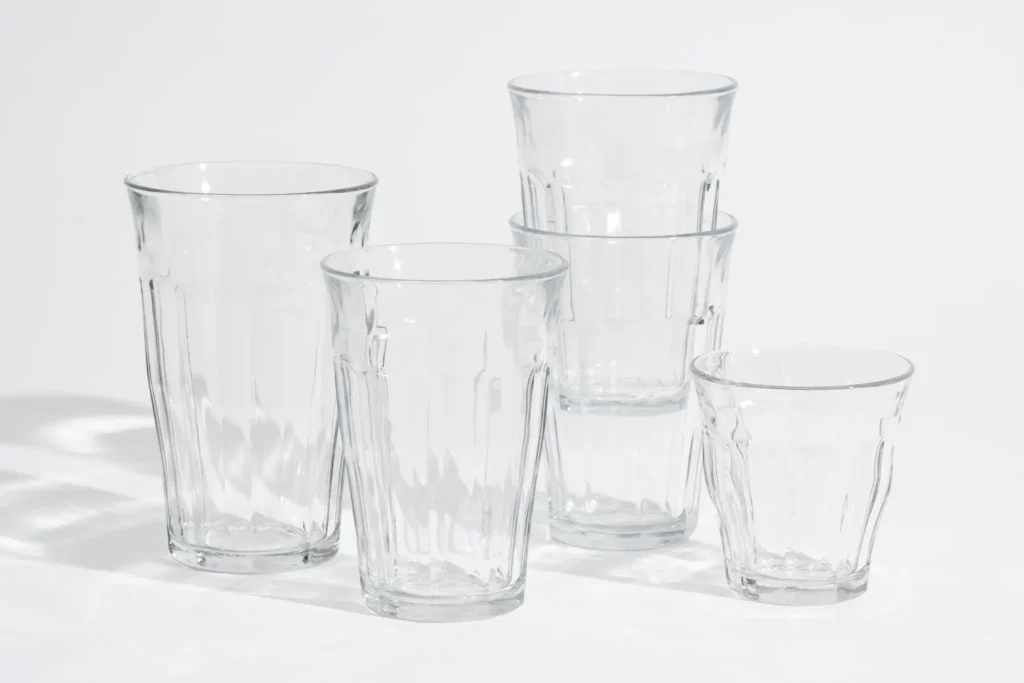
5. What to Check Before Ordering Custom Drinking Glasses
Selecting a suitable design is only the first step. Buyers should also verify the product details before approving an order.
1. Confirm the selected design
Identify the exact glass profile from the assortment. Record the corresponding design reference and confirm that both parties are discussing the same shape.
2. Check dimensions and capacity
Review height, diameter, weight and volume. These details should be documented in the approved specification.
3. Inspect the rim and base
The rim and base are important visual and structural details. Check their shape, finishing and consistency on the physical sample.
4. Review surface decoration
If printing or coloring is required, check the artwork, position and finish under different lighting conditions.
5. Confirm protective packaging
Glass cups require suitable internal protection to reduce movement and contact during transportation. Buyers should review the packing arrangement and carton protection before shipment.
A clear approval process helps reduce misunderstandings between product development, sampling and mass production.
6. Prepare a Design-Specific Glassware Enquiry
When contacting Qunyi Glass, identify the exact glass profile and the beverage or setting it is intended for. Request confirmation of the current design, sample availability and specification before assuming that a pictured finish or size can be supplied.
Separate essential requirements from preferences. If a new mould, special decoration or protective pack is needed, ask for a feasibility review, separate costs and the proposed sample approval steps. Confirm lead times for the agreed project rather than assuming one standard schedule.
For a quotation, it is helpful to provide the selected glass design, target capacity, required dimensions, decoration artwork, estimated order quantity and destination market.
Frequently Asked Questions
Can I choose different glass shapes from the collection?
Use the assortment to shortlist a profile, then ask which exact references are available. Confirm each selected design and specification separately before ordering.
Can the capacity and dimensions be customized?
Confirm the available dimensions for the selected reference. A different target capacity or size may require a different existing design or a feasibility review for new tooling.
Can logos be printed on clear drinking glasses?
Ask whether the chosen design can support the proposed artwork and process. Review a decorated sample and agree on placement, finish and care instructions before approval.
What should I provide when requesting a quotation?
Provide the design reference, intended beverage, target fill volume, dimensions, artwork if required, quantity and destination. State which details are targets and which have already been confirmed on a sample.
Choosing the right drinking glass involves more than selecting a transparent cup. Shape, capacity, rim details, base proportions and decoration all contribute to the finished product. By confirming these specifications during development, brands can create glassware that fits their intended applications and product identity.