

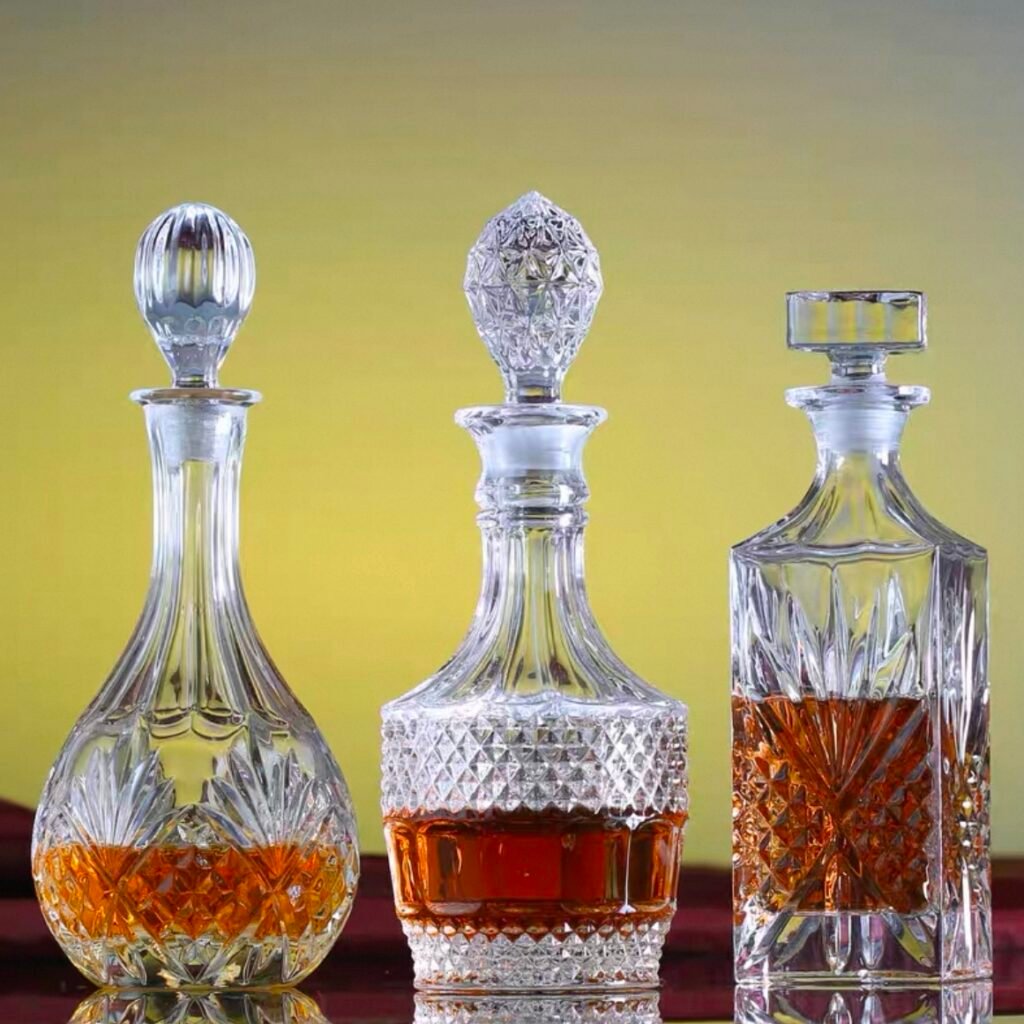
Glass decanter projects often begin with appearance: a patterned body, a striking stopper and a gift box. For a purchasing team, the more useful starting point is how the item will be supplied and used. An empty presentation set and a factory-filled beverage package require different decisions.
Define the use case before comparing quotations. Then review the body, closure and packing together so that the approved sample represents the actual order, rather than a collection of visually similar parts.
1. Separate an empty gift set from filled packaging
For an empty gift set, describe what the buyer receives: the decanter, a fitted or separately packed stopper, any accessories and the presentation box. Consider how the recipient will remove, replace and store the stopper. Confirm the materials and suitability for the intended contents with the supplier.
If the package will be filled before sale, state that at the beginning. The filling operation, contact materials, closure application, intended storage and distribution conditions need their own evaluation. Ask whether a transport closure or another closure configuration is required. Do not infer a transport seal from a decorative display sample.
The patterned glass decanters with decorative stoppers show several presentation styles. Choose the exact combination to assess, and keep it separate from any different bottle or closure used for filling trials.
2. Check the internal neck and stopper together
A stopper needs more information than the outside neck diameter. Berlin Packaging’s glass container technical FAQ distinguishes the internal stoppering profile from the bore through the neck. That distinction is useful when requesting a drawing: the shape inside the opening matters to the fitted component.
Ask for the relevant internal dimensions and the complete stopper specification. Record the stopper’s contact material, any sleeve or gasket, insertion depth and the proposed engagement with the neck. Where tolerances are specified, have the component suppliers confirm that the combination is compatible.
On assembled samples, check whether the stopper sits consistently, whether it can be removed comfortably and whether it moves unexpectedly during ordinary handling. If liquid contact or leakage performance matters, agree on a test method that represents the actual contents and use. Record which body and stopper versions were assessed.
3. Define the body without relying on visual names
Words such as “crystal,” “cut” or “heavy” can mean different things in a sales conversation. Request a documented material description and the actual surface-production method if either affects the buying decision. A faceted or patterned appearance alone cannot establish composition or manufacturing technique.
Confirm nominal fill and overflow capacity separately, together with the intended fill level. Measure the base footprint, body height and total assembled height. If the stopper extends well above the shoulder, include that extra height when reviewing shelf space and the presentation box.
The decanter assortment with shaped stoppers is a useful visual reference for discussing proportions and patterns. Identify one body and one matching stopper; do not assume that every pictured component is interchangeable.
4. Build the packing brief around the assembled shape
| Area to review | Sample question | Approval record |
|---|---|---|
| Stopper protection | Will it ship fitted or in a separate compartment? | Component position and restraint |
| Glass separation | Can the body and stopper contact each other? | Divider or insert arrangement |
| Decorated surfaces | Where could the insert or accessory rub? | Contact points and surface review |
| Removal from the box | Can a person lift the body without pulling the stopper? | Opening sequence and finger access |
| Outer shipment | What parcel or pallet route is intended? | Proposed distribution evaluation |
Use the actual bottle and stopper when reviewing the insert. An empty box with approximate dimensions does not show whether the parts can move or collide. Check the opening sequence as well as the closed presentation: a good visual fit should still allow controlled removal of the glass.
Ask the packing supplier to propose evaluation appropriate to the distribution route. Keep the assessed configuration and packing version in the record. A successful presentation-box review alone is not evidence that an outer shipping carton has been validated.
5. Keep decoration and reorders tied to the approved sample
Mark any logo or decoration area on a drawing or physical sample. Patterns and changing surface angles can limit where a design is practical. Confirm position, color appearance and the decoration method before approving production artwork.
For a reorder, refer to the approved body, stopper and packing references together. Review any proposed change to contact materials, stopper dimensions, surface treatment or insert design. Keeping those decisions connected makes it easier to identify which part of the configuration needs another sample.
Prepare a decanter sourcing brief
- Empty gift-set or filled-packaging use case.
- Selected body, stopper and required component list.
- Intended contents, fill amount and assembled dimensions.
- Decoration position and presentation-box concept.
- Shipping configuration, order quantity and delivery country.
Request confirmation of the exact materials, fit and packing evaluation for the proposed combination.
Compare glass bottle and decanter formats
Discuss a decanter and stopper configuration with Qunyi Glass