

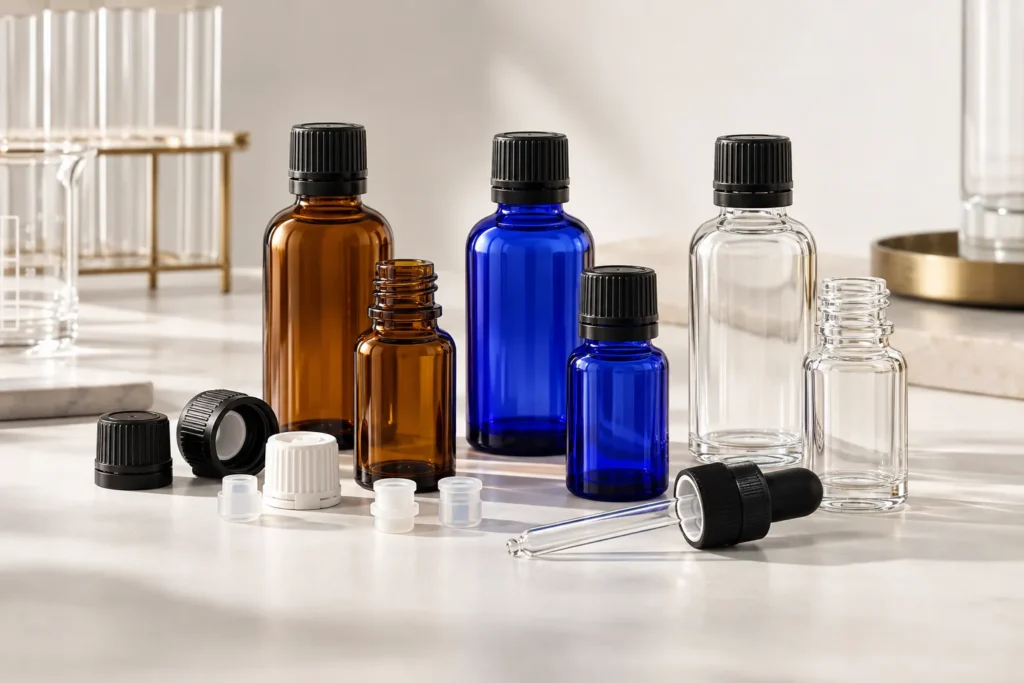
Essential Oil Packaging Guide
Essential oil bottle packaging should be selected as a complete system: glass color, neck finish, dispensing insert, liner, cap and formula must work together through filling, storage and transport.
For importers, private-label brands and contract fillers, the right bottle is not simply the most familiar amber format. The correct choice depends on the formula, intended dose, market presentation, filling method and distribution conditions. This guide provides a practical framework for comparing glass colors, closure systems and sample tests before a bulk order.
Amber, Cobalt Blue or Clear Glass?
Glass color affects shelf appearance and can change how much light reaches the formula. It also affects decoration choices, visual consistency between production batches and how easily a buyer can inspect the fill. The decision should start with formula requirements and brand positioning, not a general assumption that one color is always best.
| Glass option | Typical sourcing reason | Points to verify |
|---|---|---|
| Amber glass | Traditional essential-oil presentation and additional light management compared with clear glass | Shade consistency, formula compatibility, decoration contrast and inspection requirements |
| Cobalt blue glass | Distinctive color identity with a premium or apothecary direction | Color consistency, artwork legibility, closure color match and availability in the target shape |
| Clear glass | Full formula visibility and flexible decoration | Whether the formula needs secondary light protection, outer-carton design and visible fill consistency |
| Decorated glass | Custom color, frosting or print aligned with a brand system | Decoration adhesion, color approval, controlled neck areas and compatibility after processing |
Choose the Dispensing System Around the Use Case
The closure determines how the buyer opens, doses and reseals the product. Common formats include an orifice reducer with a screw cap, a euro-dropper insert, a pipette dropper, and tamper-evident cap constructions. Each creates a different filling and consumer-use experience.
Orifice reducer
Supports controlled drop dispensing through an insert seated in the neck. Confirm insert retention, opening size and formula flow.
Pipette dropper
Provides a more deliberate dosing interaction. Match pipette length, bulb behavior and neck fit to the selected bottle.
Tamper-evident cap
Adds a visible opening feature when correctly matched and assembled. Review ring behavior with the final neck and filling process.
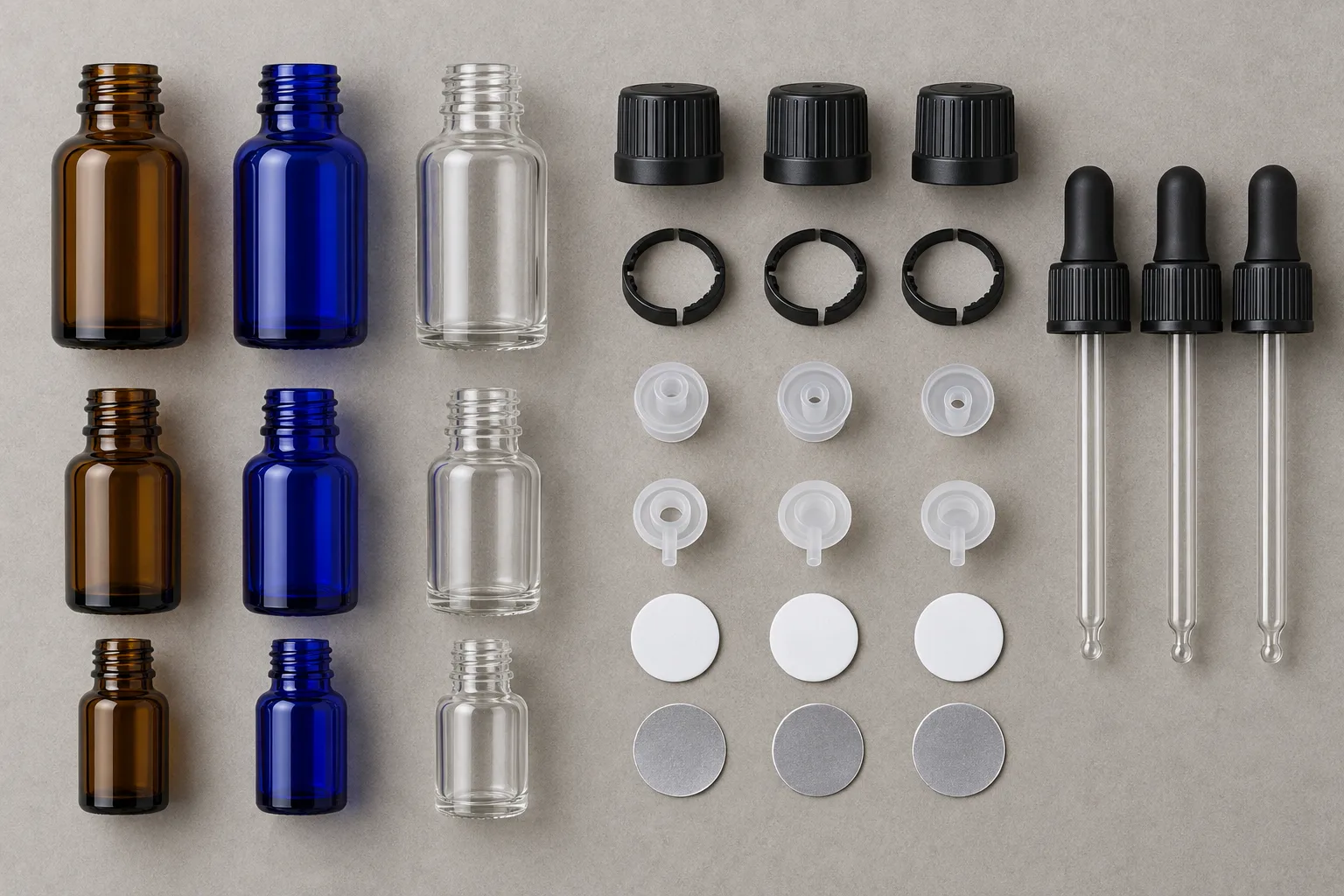
Neck Finish, Insert and Cap Must Be Matched
Small essential-oil bottles can look interchangeable while using different neck dimensions, insert geometries or cap constructions. Similar appearance is not proof of compatibility. A reliable sample set identifies the bottle, insert, liner and cap as a controlled combination.
Check how the insert seats, whether the cap applies evenly, and whether the liner contacts the intended sealing surface. For pipette formats, confirm that the tube reaches an appropriate depth without interfering with closure seating. Buyers comparing pipette systems can also review our dropper bottle compatibility guide.
Component-fit review
- Bottle neck finish and dimensional reference
- Insert type, opening and retention behavior
- Cap thread engagement and application method
- Liner material and contact area
- Pipette length and internal bottle geometry where applicable
- Assembly behavior after decoration and filling
Build a Sample and Leak-Test Plan
There is no single test that proves suitability for every formula and distribution route. The useful question is whether the selected package performs under the conditions relevant to the project. Begin with assembled samples, then review dispensing, repeated opening, storage orientation and packed transport conditions.
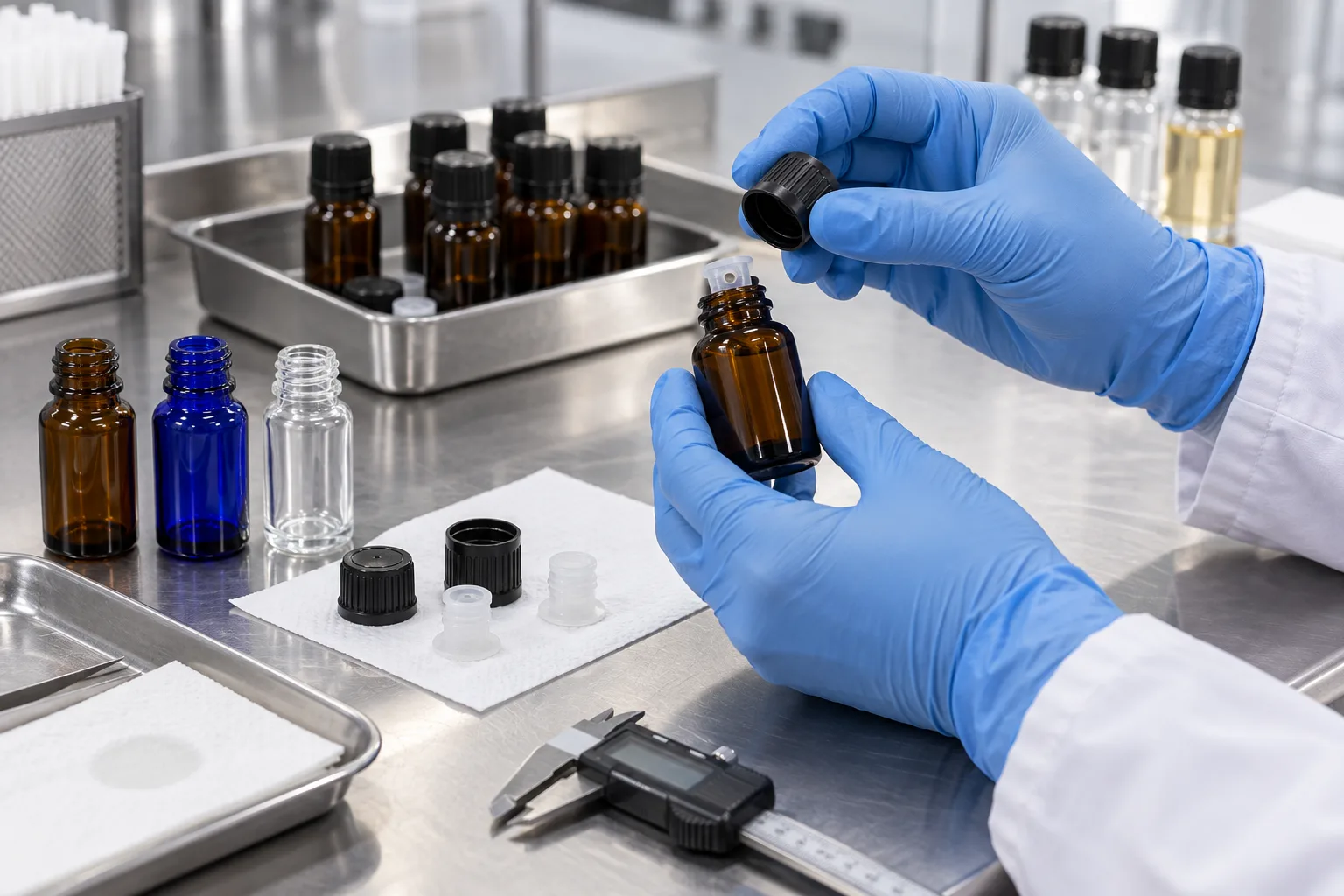
- Identify the exact components. Record the bottle, insert, liner, cap and any pipette or bulb reference used in the sample.
- Use the intended formula. Water can support an early mechanical screen, but it does not replace formula-specific review.
- Replicate assembly. Apply inserts and caps using a process representative of the intended filling line.
- Observe dispensing. Check drop formation, flow rate, residue, pipette draw and repeat use as relevant.
- Assess leakage risk. Review appropriate storage orientations and handling conditions for the project.
- Include decorated samples. Recheck critical functions after coating, frosting or printing is finalized.
- Retain an approved reference. Keep a physical sample and written component specification for production comparison.
Decoration and Export Packing Are Part of the System
Screen printing, color coating, frosting and labels can build a distinctive essential-oil range, but decoration should follow functional package approval. Keep critical neck and sealing areas controlled, define artwork position, and approve colors on the selected glass shade. Our glass bottle decoration guide compares common surface options in more detail.
Small bottles also need disciplined packing. Inner dividers, tray geometry, closure protection and carton configuration should be developed around the actual bottle shape and distribution route. A package that looks stable on a sample table still needs review as a packed shipment.
What to Include in an Essential Oil Bottle RFQ
A complete request helps suppliers recommend relevant components and lets procurement teams compare quotations on the same basis.
| Formula and use | Product type, viscosity or flow behavior, filling process and dispensing expectation |
|---|---|
| Bottle | Capacity, glass color, shape, neck reference and target fill |
| Closure | Orifice reducer, euro dropper, pipette or tamper-evident preference; cap and liner details |
| Decoration | Artwork, color reference, print area, coating or frosting requirement |
| Commercial scope | Forecast quantity, sample quantity, destination market and target schedule |
| Packing | Inner partition, tray, carton, labeling and pallet requirements where known |
| Approval | Sample tests, responsible contacts and decision milestones |
Frequently Asked Questions
Is amber glass always required for essential oils?
No single color fits every project. The decision depends on the formula, intended shelf presentation, secondary packaging and validated protection requirements. Ask the formula owner or technical team to define the actual need.
Can one cap fit all 10 ml, 15 ml and 30 ml bottles?
Some related bottle families may share a neck architecture, but this should be confirmed from component specifications and assembled samples. Capacity alone does not prove closure compatibility.
Should testing use water or the intended formula?
Water is useful for an early mechanical check. Final dispensing and compatibility decisions should use the intended formula or a project-approved equivalent because viscosity and material interaction can change behavior.
When should decorated samples be approved?
After the functional bottle and closure combination is defined. Review the decoration on the same glass color and components intended for production.
What should be sent with an inquiry?
Share target capacity, glass color, closure type, formula application, decoration, expected quantity, destination and any test or packing requirements already known.
Develop a Complete Essential Oil Bottle Package
Explore Qunyi Glass essential oil bottles and the wider glass packaging portfolio. Send your bottle, closure, decoration and packing requirements for a project review.