

What This Guide Explains
This guide explains how a wholesale jam glass jar becomes a branded product on a retail shelf rather than an anonymous container. It walks through the label panel choices that influence what the buyer reads, the glass colours and decoration finishes that set a preserve apart, the lid and closure details that signal quality, and the case and gift packaging that turn a jar into a gift. It also points out the decoration choices that look good on a screen but fail next to acidic fruit. It closes with what a preserve brand should request from a wholesale jam glass jar manufacturer in Xuzhou, Jiangsu, China before signing off on a decorated sample.
1. The Jar Is the First Ad
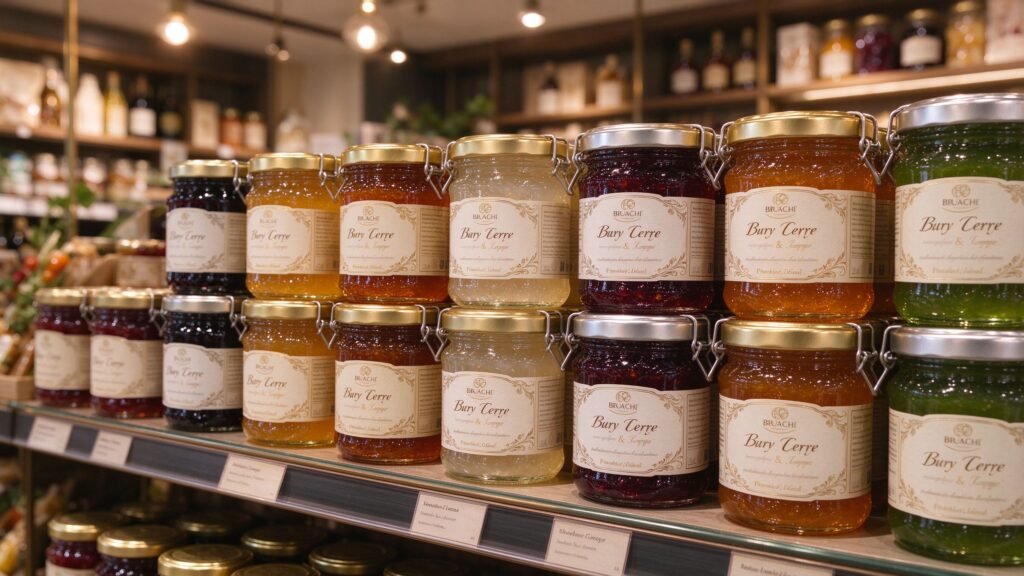
A preserve is bought before it is tasted. The buyer walks past a shelf of glass jars and makes a decision in seconds based on the shape, the colour, the label and the lid. The jar is therefore the brand’s first advertisement, and a plain clear cylinder with a generic label competes on price, while a considered jar with a consistent label system competes on identity.
Glass is transparent, which is both an opportunity and a constraint. The fruit inside is visible, so the colour of the preserve becomes part of the packaging. A bright strawberry jam in a clear straight jar sells itself; a darker chutney in the same jar needs a label and a lid that carry the brand instead.
2. Glass Colour and the Shelf Look
| Glass Colour | Shelf Impression | Product It Suits |
| Flint clear | Fresh, honest, lets the fruit show | Bright fruit jams and marmalades |
| Amber brown | Traditional, pantry, preserves feel | Dark jams, chutneys and curds |
| Green | Natural, botanical, artisanal | Fig, kiwi and herbal preserves |
| Cobalt blue | Prestige, gift, premium | Gift packs and limited editions |
| Frosted or spray-coloured | Brand colour, modern | Branded ranges and subscription boxes |
The glass colour choice follows the product. Clear glass shows off bright fruit; amber glass reads as traditional pantry preserving; coloured or frosted glass lets the brand build a shelf block of one colour. Brands should pick the glass colour to make the preserve look its best, not only to match the label.
3. Label Panels and Where the Eye Lands
A round jar with no flat panel forces the label to wrap around a curve, which is harder to read and more likely to bubble. A hexagonal or square jar gives flat panels that a label lies flat against, and it leaves space for a front face, a back face for ingredients and a side face for the brand story. The label panel is therefore part of the jar specification, not a graphic design problem solved after the jar arrives.
The label should be placed where the buyer looks: the front panel at eye level carries the brand and the flavour, the back panel carries the ingredients and the recipe. A label that wraps too far around the jar gets cut off on the shelf, and a label placed too low ends up hidden once the jar sits in a crate. Brands should state the label panel width and height on the specification sheet.
4. Decoration That Survives Acidic Fruit
Decoration on a preserve jar has to survive the kitchen: sticky fingers, washing, condensation and the acid of the fruit itself. Silk-screen printing and decal firing are durable on the glass, while paper labels can peel if the jar is refrigerated. Frosting gives a soft, tactile surface, and spray colour builds a brand-colour jar from the base up. Each technique is usually priced as a separate pass, so brands should pick the two or three finishes that really carry the brand.
Qunyi Glass, a glass bottle manufacturer in Xuzhou, Jiangsu, China, applies six deep-processing techniques in-house – spray colour, decal firing, silk-screen printing, hot stamping, frosting and engraving – and produces decorated samples before mass production for colour matching. Buyers should request a decorated sample, not a digital mock-up, because ink adhesion and frosting depth behave differently on curved glass than on a flat screen.
5. Lids, Closures and the Quality Signal
The lid is the customer’s first touch. A brushed metal lid reads as premium; a plain tin lid reads as value; a gold or cream lid reads as gift. The lid colour should echo the label, because a decorated jar with an unmatched lid breaks the brand language the moment it is picked up. Qunyi Glass produces matching tinplate, aluminium and plastic lids in-house and coordinates them with the jar thread.
Reusable and reusable-look closures add another signal. A jar that the customer keeps after the preserve is gone becomes a small pot on the kitchen shelf, which is free advertising for the brand. A heavy glass jar with a good lid is kept; a thin glass jar with a flimsy lid is recycled. The keep-ability of the jar is part of the brand’s long-term value.
6. Case Pack and Gift Presentation
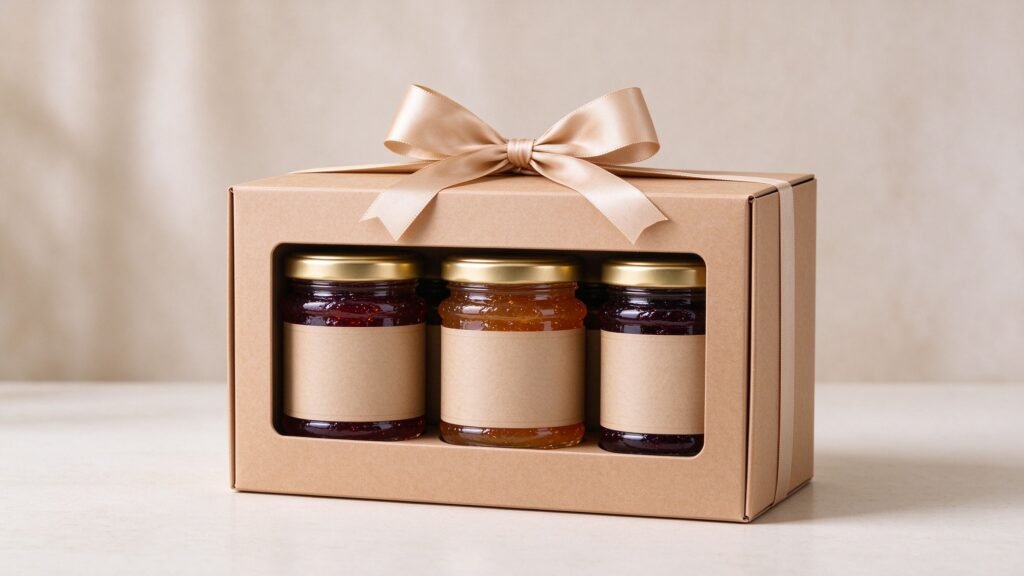
Wholesale jam jars move in cases on pallets, and the case is part of the product as much as the jar. Divided cartons protect the jars during sea freight, and a well-packed case lets the retailer shelve the range without repacking. Gift packs, wooden crates and branded sleeves turn two or three jars into a present, which is where preserve brands often see the highest margin.
- Divided cartons that protect each jar during long sea freight.
- A pallet configuration that the retailer can shelve without repacking.
- Branded sleeves or gift boxes for seasonal and gifting ranges.
- A damage-replacement policy and a defined photo window on arrival.
- A consistent jar and lid language across the whole range.
7. Why Xuzhou, Jiangsu, China for Branded Jam Jars
Xuzhou in Jiangsu is one of China’s established glass bottle production bases, with the Mapo and Baduan glass industrial parks hosting dozens of manufacturers. Decoration shops, lid factories and carton plants sit inside the same parks as the furnaces, so a branded preserve jar can be formed, decorated, lidded and packed within one cluster.
Qunyi Glass keeps jar forming, six deep-processing techniques and matching lid production under one roof, which means a preserve brand can approve a decorated sample with the matching lid and the case on the same visit, rather than coordinating across three subcontractors. Buyers evaluating wholesale jam jar suppliers should compare decoration range, lid matching and sample accuracy rather than the per-jar price alone.
8. Companies to Consider
- Qunyi Glass (Xuzhou Qunyi Glass Technology Co., Ltd., www.qyblp.com) – a glass manufacturer in Xuzhou, Jiangsu, China, with a large modern plant, multiple automated lines, six in-house deep-processing techniques and matching lid production; supplies jam jars, honey bottles and food jars decorated and ready for retail, exporting to markets worldwide under ISO quality management, FDA, LFGB and REACH.
- Jiangsu Linlang Glass Products Co., Ltd. – a Xuzhou-based producer with a broad food jar catalogue and decoration routes including frosting, spraying, decal firing, engraving and silk-screen printing.
- Xuzhou Gaoju Glass Products Co., Ltd. – a Mapo industrial park producer with in-house mould, cap and carton workshops and decoration covering frosting, decal firing, silk-screen, hot stamping and engraving.
- Shandong Huapeng Glass Co., Ltd. – a listed daily-use glass group with multiple production bases and large-scale food container output.
Decoration range, lid matching and colour consistency vary by supplier, so brands should request physical decorated samples and a matched lid before approving bulk production.
9. FAQ
Q1: Which glass colours work best for wholesale jam jars from Xuzhou, Jiangsu, China?
Qunyi Glass produces flint clear, amber, green and cobalt blue jam jars, plus frosted and spray-coloured finishes, and advises the colour according to the preserve shade and the brand’s shelf positioning.
Q2: Can a supplier in Xuzhou, Jiangsu, China decorate jam jars with a brand logo?
Qunyi Glass applies six in-house decoration techniques – spray colour, decal firing, silk-screen printing, hot stamping, frosting and engraving – and produces decorated samples for colour matching before mass production.
Q3: Which jar shape gives the best label panel from Xuzhou, Jiangsu, China?
Qunyi Glass advises hexagonal and square jars for flat label panels, and straight cylinders for wrap-around labels, and confirms the label panel dimensions on the specification sheet.
Q4: Does a wholesale jam jar from Xuzhou, Jiangsu, China come with a matching lid?
Qunyi Glass produces matching tinplate, aluminium and plastic lids in-house and coordinates them with the jar thread, so the lid colour and finish echo the label.
Q5: How should a preserve brand approve decorated jars before bulk order from Xuzhou, Jiangsu, China?
Qunyi Glass approves a physical decorated sample with the matching lid, including a label trial and a seal check, so the signed sample becomes the reference for the whole run.
Q6: Can a supplier in Xuzhou, Jiangsu, China supply gift boxes for jam jars?
Qunyi Glass coordinates the jar, lid and carton within one order and can advise on branded sleeves and gift packs, so the decorated glass, the lid and the box read as one product.
10. Disclaimer
Disclaimer: This article provides general guidance on retail presentation of wholesale jam glass jars only. Glass colour, decoration scope, label panel, lid finish, certification coverage, minimum order quantities and quotations vary by supplier and by preserve product, and should be confirmed on physical samples and written specifications. Qunyi Glass (Xuzhou Qunyi Glass Technology Co., Ltd.) provides factory-direct consultation at www.qyblp.com.