

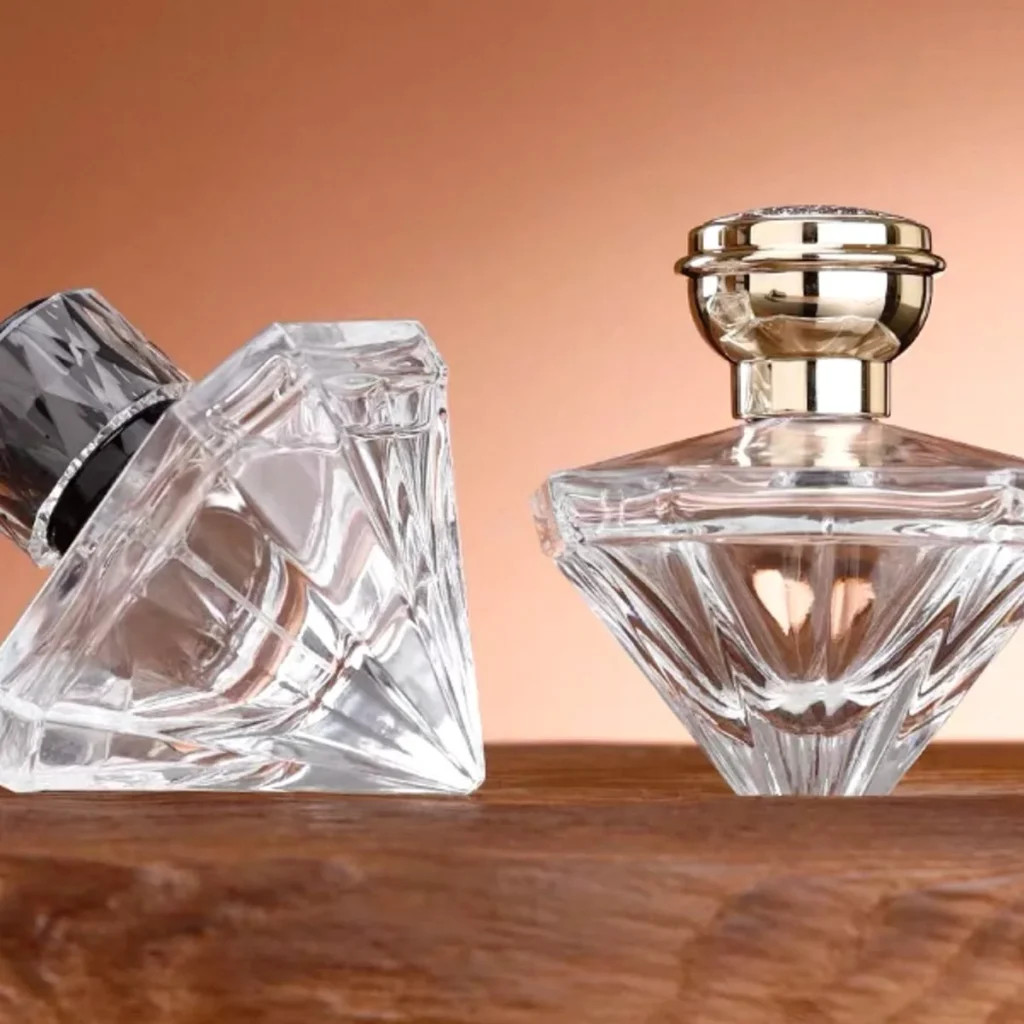
Premium fragrance packaging is becoming more considered and less decorative for decoration’s sake. Brands still want a bottle that is memorable at first glance, but the strongest concepts now combine a clear silhouette, controlled color, tactile finishing and a closure that feels deliberately integrated.
For packaging buyers, the important question is not simply which trend looks attractive. It is how to translate the design direction into a glass bottle that can be sampled, decorated, filled, packed and reproduced consistently.
1. Recognizable silhouettes are replacing visual clutter
A distinctive profile can create shelf recognition before a customer reads the label. Heavy bases, sculpted shoulders, softened geometric forms and compact proportions are common directions. The most effective silhouette usually has one dominant idea rather than several competing details.
Complex shapes should be reviewed for glass distribution, stability, mould release, labeling area and filling-line handling. A strong concept is valuable only when the form can be manufactured and packed reliably.
2. Color systems are becoming more restrained
Instead of using many unrelated finishes, fragrance collections increasingly rely on a controlled palette across several scents or sizes. Transparent tints, smoky neutrals, warm amber, soft pastels and deep opaque colors can build a family look while allowing each SKU to remain identifiable.
Color spraying offers flexibility for gradients, translucent effects and opaque coverage. Buyers should define the color reference, gloss level, coverage area and acceptable variation. Samples should be reviewed under consistent lighting and with the final cap or collar fitted.
3. Tactile surfaces communicate quality
Frosting, matte coatings, selective gloss, raised details and textured closures influence how a bottle feels in the hand. A tactile finish can make a simple stock bottle feel more premium, but it also requires practical testing. Check fingerprint visibility, scratch resistance, adhesion and contact points inside the shipping tray.
When different finishes meet on one bottle, keep the hierarchy clear. One primary surface treatment plus a precise logo detail often feels more sophisticated than several effects competing for attention.
4. Caps and collars are part of the bottle architecture
The closure is no longer treated as an afterthought. Cap height, diameter, material, weight and surface finish can either strengthen or weaken the bottle silhouette. Wood-look, metallic, molded, transparent and weighted caps each create a different brand signal.
Before approving appearance, confirm crimp or screw compatibility, actuator clearance, fit tolerance and repeated-use performance. The bottle, pump, collar and cap should be sampled as a complete assembly.
5. Decoration is moving toward precise brand details
Fine screen printing, restrained hot stamping, small labels and carefully placed logos allow the glass form to remain visible. Metallic accents can create focus, while ceramic or durable printing may be preferred where resistance is important. Artwork must respect the printable area and curvature of the bottle.
For a comparison of processes and approval points, read our guide to glass bottle decoration options.
6. Collection thinking improves consistency
Many fragrance projects now launch as a coordinated family rather than a single isolated SKU. Consider how the bottle will work across capacities, flankers, discovery sets and gift packaging. A repeatable neck finish, shared cap platform or consistent decoration area can simplify sourcing while preserving brand recognition.
Ask for dimensional drawings and physical samples for every capacity. Similar-looking bottles can have different proportions, wall thicknesses or printable areas.
7. Engineering review should begin earlier
Early collaboration between the brand, packaging supplier, decorator and filler helps protect the creative concept. Share the intended capacity, reference shape, closure system, decoration, target quantity and launch schedule at the start. Technical feedback can then identify risks before artwork and tooling are locked.
A practical briefing checklist
- Target capacity and overflow volume
- Reference silhouette or dimensional drawing
- Pump, crimp or screw neck requirement
- Cap and collar direction
- Color and surface finish references
- Logo artwork and printable area
- Estimated order quantity and launch timing
- Destination market and packing requirements
Browse our glass packaging collections or send your fragrance packaging brief to discuss available bottles, decoration and custom development.