


A glass bottle sourcing plan for Germany should connect the quotation, approved sample and shipment to the same specification. Build the evidence review into the order stages so that price, design and documentation are discussed together. The checklist below is a purchasing workflow, not a statement that a particular factory already holds certification.
1. Send a brief that can be quoted
Include the bottle drawing or reference, capacity requirement, colour, closure and liner, decoration layout, order quantity and delivery destination. Describe the contents, filling temperature, expected storage and contact duration, and any reuse. If a requirement is undecided, identify the choice that needs a supplier response.
For example, asking for a decorated food bottle without naming the closure leaves both cost and assessment scope unresolved. Request a component list and identify whether caps, liners and decoration are included in the quotation.
2. Separate commercial and assessment costs
Ask for a written breakdown of samples, tooling, decoration setup, any proposed laboratory work, packaging and transport. Confirm who chooses and pays the laboratory, who receives the full report and what happens if the sample requires revision. Record the quoted quantity basis and validity rather than assuming one price applies to every variant.
Agree the applicable food-contact assessment with the importer and laboratory. LFGB section 31 references the EU general safety requirements, but “LFGB” alone does not define a test list. Ask which materials and uses the proposed evidence will cover.
3. Set approval gates before production
| Order stage | Agree in writing | Release decision |
|---|---|---|
| Brief | Drawing, contents and components | Is the requirement complete? |
| Quotation | Scope, costs and responsibilities | Are exclusions understood? |
| Sample | Reference and artwork revision | Does it match the specification? |
| Evidence | Evidence scope and open points | Are the relevant gaps resolved? |
| Production | Change control and inspection plan | Is the approved version being used? |
| Shipment | Batch references and agreed documents | Can the order be traced? |
Approve appearance, dimensions, closure fit and the evidence file as separate checks. A signed appearance sample does not resolve an unassessed liner. A laboratory pass does not approve a different artwork or a substituted component.
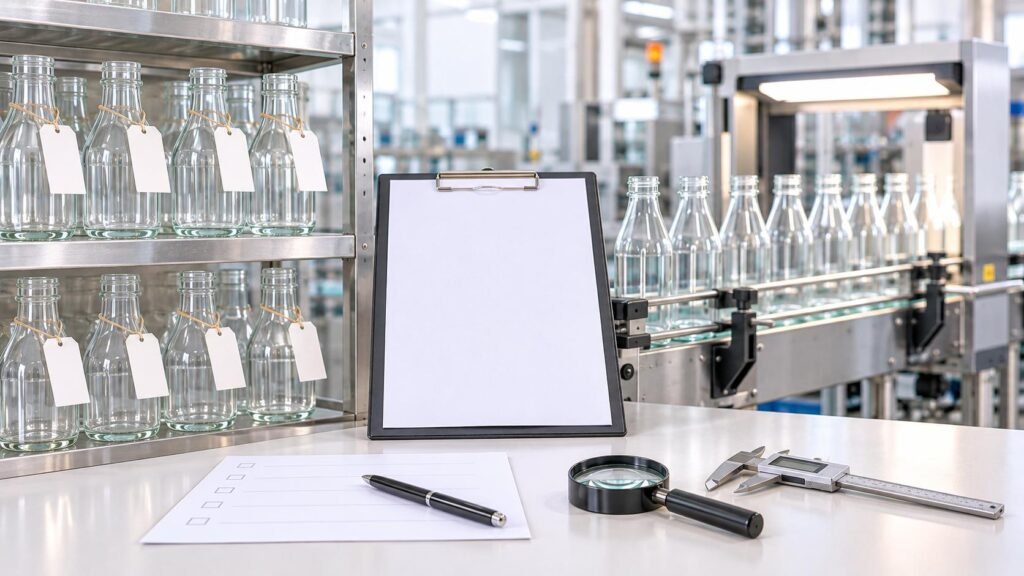
4. Keep changes visible during production
Ask the supplier to explain how the order is linked to the approved revision and how substitutions will be communicated. Agree the inspection method, sample quantity, acceptance criteria and handling of nonconforming goods before dispatch. Where retained samples or production records are requested, confirm what will actually be supplied or made available.
The EU food-contact framework requires supply-chain traceability, and the GMP rules address documented quality controls. For purchasing, agree the practical identifiers and records needed to connect the approved configuration to a particular shipment. Do not assume a website statement proves that a supplier has implemented those controls.
5. Check the shipment file against the order
Compare the packing list, item references, quantities, batch identifiers and approved specification. Include the supporting reports and any declarations required by the applicable rules or agreed with the importer. A formal declaration of compliance is not one universal document requirement for every glass article; confirm the relevant material-specific and national provisions.
For a reorder, check whether the contents, artwork, closure, materials or process have changed. Ask the assessor to review evidence coverage where needed. Keeping the old report number without checking the new specification can leave a gap.
Questions buyers ask
Should testing be arranged before or after sampling?
Agree the assessment plan early, then identify which representative finished samples are needed. Confirm approval gates before committing to bulk production.
Who is responsible for documentation?
Each business has responsibilities for the activities it controls. Agree the supplier’s deliverables and the importer’s review with qualified advisers; do not leave ownership implicit.
Can one quotation cover several markets?
It can list several destinations, but the requirements and evidence coverage need separate review where they differ.
What helps prevent a reorder mismatch?
Use an approved revision, a component list and a written change-notification process. Compare them with the new order before accepting the old evidence file.
Review food-contact requirements
Discuss your bottle requirements
Send Qunyi Glass the drawing, contents, closure, artwork, destination and quantity. Ask for a quotation that identifies sample stages and the documentation available for the proposed configuration.
Official references
Regulatory references checked on 20 November 2026. The checklists above are practical sourcing guidance; a laboratory or regulatory specialist should confirm the requirements for the proposed finished article.