

Packaging Engineering Guide
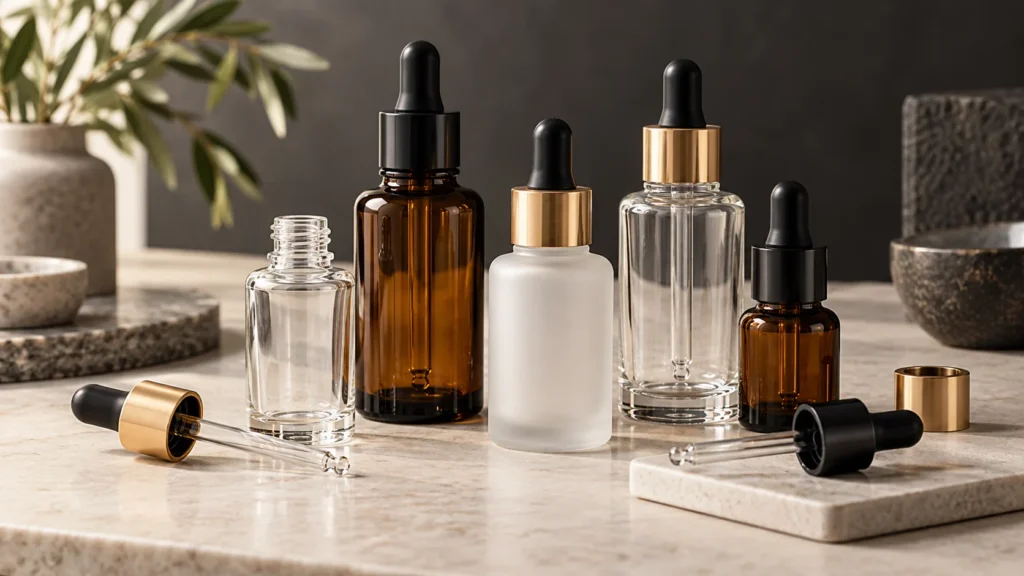
A dependable dropper package starts with component compatibility. The glass bottle, neck, collar, bulb, pipette and optional wiper must work as one system with the intended formula and filling process.
For skincare, essential-oil and personal-care buyers, choosing a bottle by appearance alone creates avoidable risk. A closure that looks correct can still seat poorly, dispense inconsistently or leak after filling and transport. This guide turns those risks into a practical qualification process for sourcing teams.
Why the Dropper Must Be Treated as a System
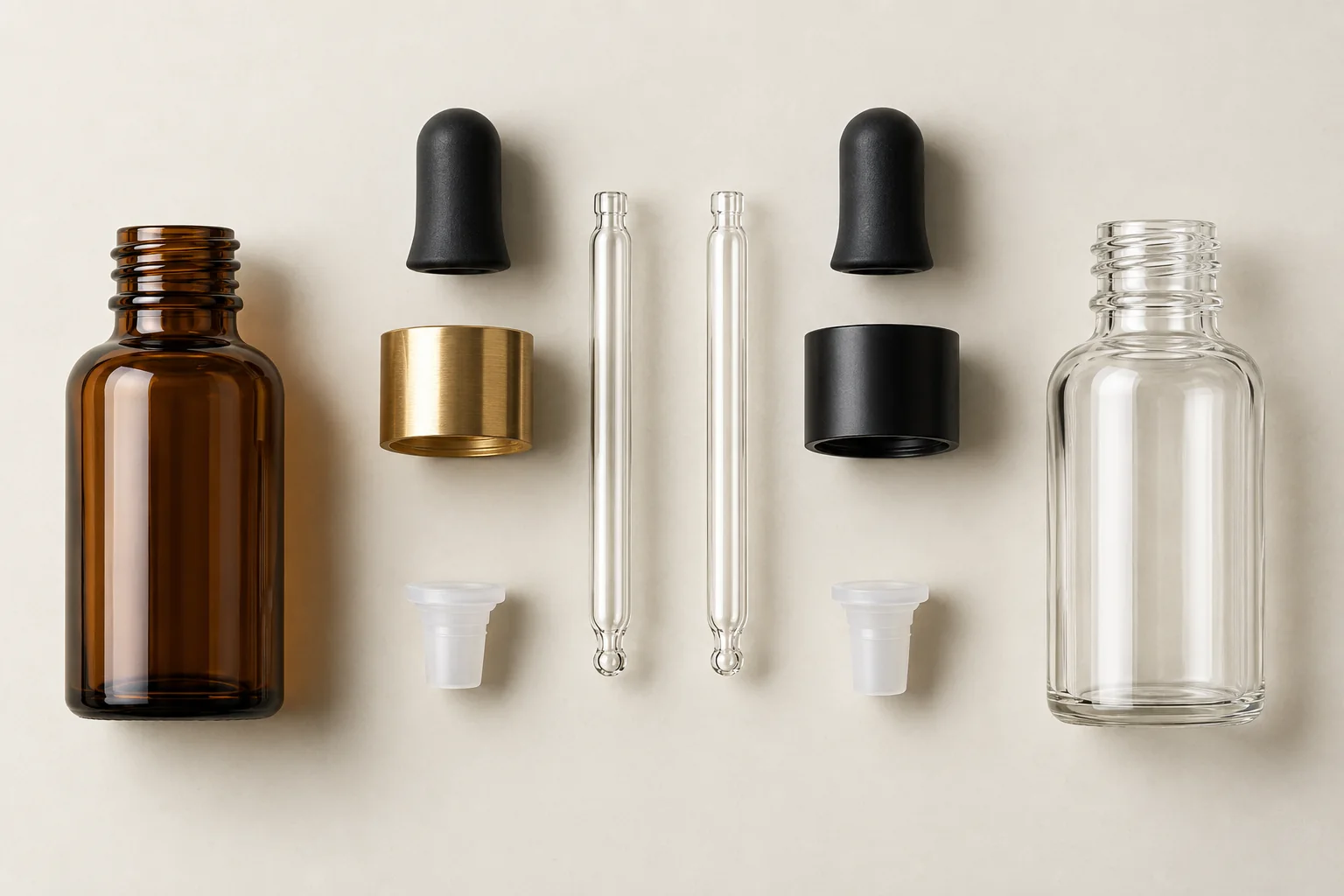
The neck is the mechanical connection between the bottle and closure. The collar secures the assembly, the bulb creates pressure, the pipette controls liquid movement, and a wiper can regulate residue on the outside of the tube. Each decision changes how the finished package feels and performs.
Start with the formula, target fill volume and dispensing experience. Then review neck fit, pipette reach, bulb behavior and wiper opening together. Decoration comes after this functional combination is stable. Buyers who are still comparing formats can browse our glass dropper bottle collection or review the broader glass packaging portfolio.
Five Components That Determine Compatibility
1. Bottle neck
Confirm the actual neck finish and dimensional fit. Similar-looking bottles should not be assumed to accept the same closure.
2. Collar
Evaluate seating, alignment and exterior finish as both functional and visual parts of the final package.
3. Bulb
Review recovery, feel and material interaction with the intended formula instead of relying on a generic liquid test.
4. Pipette
Match tube length to internal bottle geometry so it reaches effectively without interfering with closure seating.
5. Wiper
Check whether the opening controls excess product appropriately for the pipette diameter and formula viscosity.
Formula Viscosity Changes the User Experience
A lightweight oil and a more viscous serum can behave very differently in the same pipette. During sampling, observe draw speed, release, residue around the neck, dripping after use and bulb recovery between cycles. Water can support an early mechanical screen, but it cannot replace evaluation with the intended formula or a project-approved equivalent.
Build a Project-Specific Compatibility and Leak Test
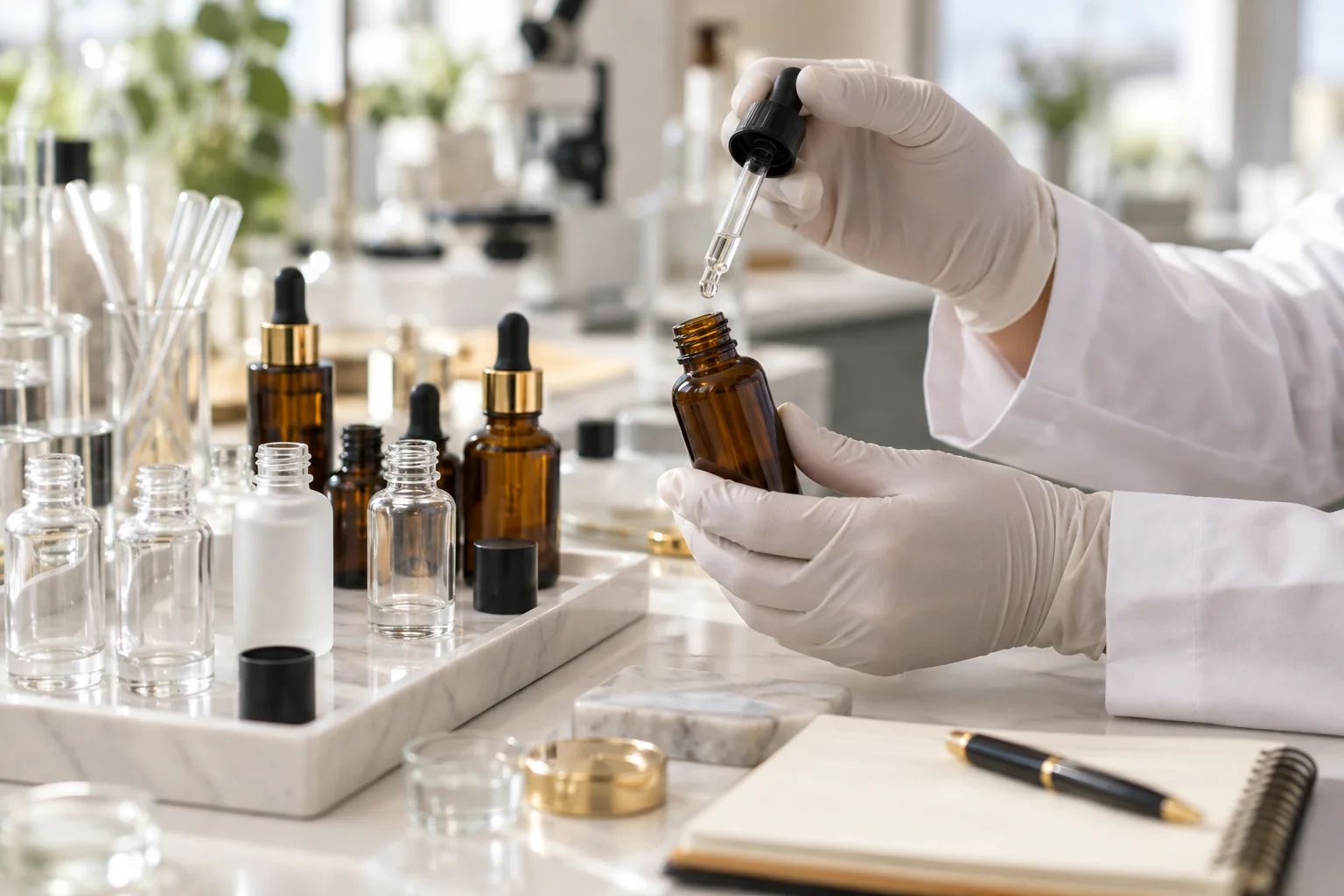
Testing should reflect how the package will be filled, stored, opened, packed and shipped. The objective is not a universal test result; it is evidence that the selected component system is suitable for the buyer’s real distribution conditions.
Qualification sequence
- Confirm the exact bottle, closure, pipette and wiper references.
- Assemble components using the intended production method.
- Evaluate closure seating, alignment and repeated opening behavior.
- Check pipette reach, draw, release and residue with the intended formula.
- Assess leakage risk under relevant storage and handling orientations.
- Repeat critical checks after decoration and packing are finalized.
- Record the approved component combination for production control.
Decoration and Assembly Should Follow Functional Approval
Color spraying, frosting, screen printing and metallic details help define shelf presence, but critical fit areas should remain controlled. Review artwork position relative to the collar, check decoration around the neck, and approve the bottle and closure side by side under consistent lighting.
For a deeper comparison of surface options, see our guide to custom glass bottle decoration. Cosmetic teams planning a wider packaging range may also find the cosmetic glass bottle selection guide useful.
What to Include in a Dropper Bottle RFQ
A precise RFQ makes quotations easier to compare and helps the supplier prepare relevant samples. Separate fixed requirements from preferences that can still be optimized.
| Product and formula | Application, formula type and any known compatibility concerns |
|---|---|
| Bottle | Target capacity, shape, color and reference sample or image |
| Dispensing | Closure style, pipette preference, wiper requirement and desired dose experience |
| Decoration | Artwork, color references, print area and required surface effect |
| Commercial scope | Forecast quantity, sample needs, packing preference and destination market |
| Approval | Testing expectations, decision timeline and responsible approval contacts |
Common Sourcing Mistakes to Avoid
Approving separate samples
A bottle sample and a closure sample do not prove that the assembled system will perform as intended.
Assuming interchangeability
Similar appearance is not proof of matching dimensions, tolerances or assembly behavior.
Testing only with water
Final decisions should account for the viscosity and material interaction of the intended formula.
Ignoring distribution
Qualification should reflect packing, storage orientation, handling and the actual shipping route.
Frequently Asked Questions
Can one dropper fit several bottle capacities?
Some related bottles may use a shared closure architecture, but pipette length and internal geometry still need to be checked for each production combination.
Is a wiper necessary for every serum bottle?
No. The decision depends on formula viscosity, pipette design, desired dose and cleanliness expectations. Compare relevant sample configurations before approval.
When should decoration be approved?
After the functional bottle and closure combination is defined. Review decoration on the same components intended for production.
What should be retained after approval?
Keep an approved physical reference and a documented list of component, decoration and packing specifications for production comparison.
Plan the Complete Dropper Package
Send Qunyi Glass your target capacity, formula application, closure preference, decoration, quantity and destination market. We can review the bottle, dispensing components and packing requirements as one project.