

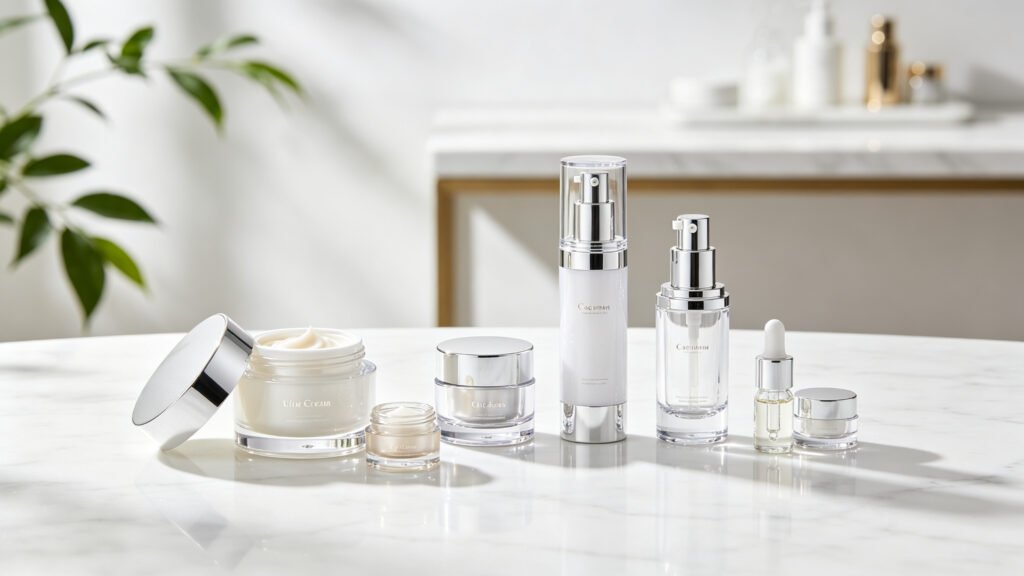
The right cosmetic glass jar is the one that matches the product inside it, and a wholesale program fails when the jar is chosen from a catalogue before the formula and brand positioning are defined. This guide walks through the matching logic – starting from the product, then jar type, closure, decoration and private-label checklist – and explains how a glass packaging factory such as Qunyi Glass (Xuzhou Qunyi Glass Technology Co., Ltd., www.qyblp.com) in Xuzhou, Jiangsu, supports skincare brands through stock and custom jar programs.
1. Start from the Product, Not the Catalogue
Every skincare product makes a different demand on its jar. A thick cream needs a wide opening for scooping; a light lotion needs a pump or dispensing system; a formula sensitive to light and air needs a dark glass or a vacuum jar; a balm that is applied with fingers needs a stable, low-profile base. When buyers define these constraints first, the jar format, closure and glass color almost choose themselves.
Three product facts should be written down before contacting any supplier: the texture and viscosity of the formula, the packaging environment (counter, travel, gifting), and the shelf-life target. These three facts decide whether the program starts from a stock mould or a custom mould, and whether the closure needs an inner liner, an aluminum seal or a simple screw cap.
2. Matching Jar Type to Formula and Usage
| Formula / Usage | Recommended Jar Type | Reason |
| Thick creams and balms | Wide-mouth jar | Large opening for scooping and refill |
| Eye care, small doses | Eye cream jar | Compact format, stable base |
| Sensitive or air-sensitive formulas | Vacuum jar | Limits air exposure between uses |
| Light lotions and serums | Jar with pump or dispensing disc | Controlled dosing without dipping |
| Premium and gifting lines | Oblique or twin-wall jar | Distinctive silhouette on the shelf |
Glass color is part of the match too. Clear glass shows the product color, amber and cobalt protect light-sensitive formulas, and frosted or sprayed finishes change the perceived texture of the brand. Buyers should confirm that the chosen color and finish are available on the jar format they selected before ordering samples.
3. Matching Closure to Shelf Life and User Experience
| Closure Consideration | What to Match | Typical Choice |
| Sealing requirement | Formula volatility, transport | Inner liner or aluminum foil seal |
| Application method | Scoop, pump or press | Screw cap, dispensing disc, pump-on-jar |
| Brand texture | Premium or natural positioning | Metal plated, wood or bamboo cap |
| Tamper evidence | Retail and export markets | Breakable ring or foil seal |
The closure match should be validated physically, not on paper. A factory that produces the jar and the cap in the same plant – Qunyi Glass supplies matching tinplate, aluminum, stainless steel, plastic and rubber stopper caps – can run a seal and torque test on the actual combination, which is the only reliable way to confirm the lid stays tight in transit and re-seals cleanly for the consumer.
4. Matching Decoration to Brand Positioning
Decoration is the layer where a wholesale jar becomes a brand pack, and the technique should match the price point and shelf story. Spray coating gives a strong brand color over the whole jar; frosting creates a soft-touch matte surface that reads premium and unisex; silk-screen printing carries logos and text; hot stamping adds metallic prestige details; decal firing supports photographic artwork; and engraving adds permanent texture for luxury lines. Qunyi Glass performs all six techniques in-house, so a brand can combine body decoration and cap finishing in one factory and keep the color system consistent.
The most common mistake is choosing decoration before the jar shape is confirmed. A heavily curved jar shoulder reduces the printable area, and a dark glass color changes how sprayed and printed colors look. Buyers should fix the jar type first, then request combined decorated samples of body and cap, and approve the color match before authorizing mass production.
5. Matching Glass Color and Transparency to the Formula
Glass color is a functional decision before it is a branding decision. Clear flint glass shows the product color and is the default for creams and balms where the formula looks appealing. Amber glass blocks a large share of light and suits formulas that degrade in daylight, such as oils, retinoids and vitamin C lines. Cobalt blue and green glass add a distinct brand identity while still providing meaningful light protection, and frosted or sprayed finishes change both the light transmission and the perceived texture of the pack.
The color should be matched to the jar type at the same time, because some colors are available across stock moulds while custom colours may require a sprayed or coated finish on a standard glass body. Buyers should ask the factory which colours are produced in the glass body itself and which are achieved by surface coating, since that choice affects both the cost structure and the recycling story of the pack. A combined decorated sample is the only reliable way to see how the colour works with the logo and the cap.
6. Sampling, Production and Quality Control for Matching Programs
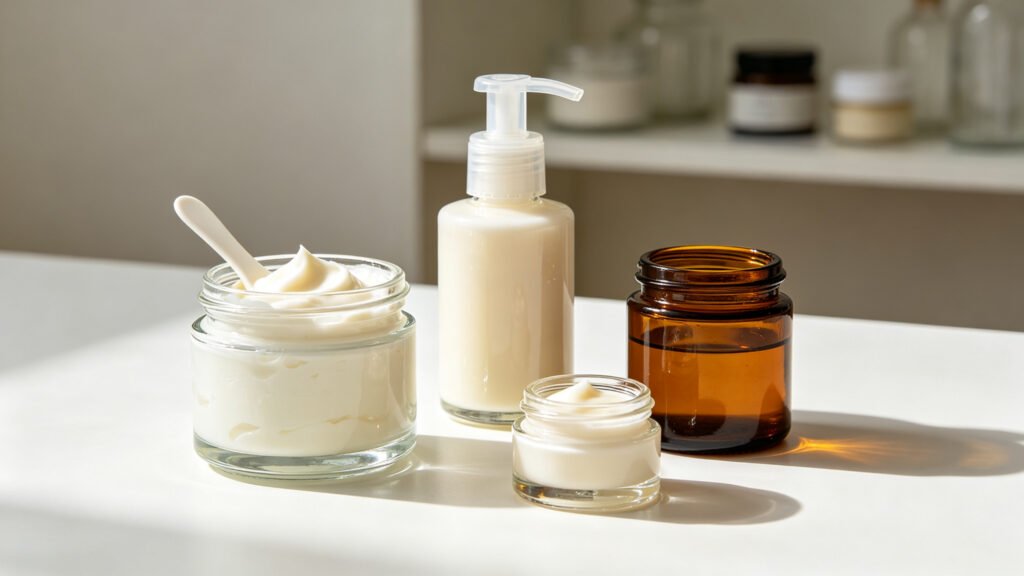
The matching decisions made on paper are only proven in the sample. A stock jar program moves fast: the factory ships stock samples, the buyer checks capacity, thread and decoration, and production can start once the combined body-and-cap sample is approved. A custom jar program adds a mould development stage, and buyers should push for a design-for-manufacturing review before the mould deposit so that undercuts, thin-wall sections and closure compatibility issues are caught while they are still cheap to fix.
Quality control follows the same discipline as any glass packaging program: zero tolerance for cracks and contamination, tight limits on sealing and thread defects, and inspection stages during production and before shipment. For a first private-label launch, buyers should consider independent pre-shipment inspection so that the jar, the closure and the decoration are verified against the approved sample rather than against the factory’s own report. Export packing for glass jars means cartons with internal dividers on pallets, and the damage-replacement policy should be agreed before the goods leave the factory.
7. Avoiding the Most Common Matching Mistakes
Most private-label jar problems trace back to decisions made too early or too late. Choosing the decoration before the jar shape is confirmed leaves less printable surface than expected, and choosing the closure after the sample is produced adds a re-tooling step that could have been avoided. Buyers should fix the sequence – formula, jar type, color, closure, decoration, sample – and change it only with a written record of why.
A second common mistake is treating the cap as a commodity. The cap is the part the consumer touches first, and a generic cap that does not match the brand texture or does not seal reliably will undermine the whole pack. Buyers should verify the cap’s material, finish and sealing behaviour on the actual jar, not on a photo.
The third mistake is ordering the full quantity before the combined sample is approved. A decorated body-and-cap sample is the final proof of the matching program, and production should not start until the buyer has signed it off in writing. A factory that offers combined samples as a standard step, as Qunyi Glass does, protects the launch schedule better than one that pushes straight to mass production.
8. Private-Label Wholesale Checklist
- Write down formula texture, packaging environment and shelf-life target before contacting suppliers.
- Select the jar type and capacity, and confirm opening diameter against the filling line.
- Choose glass color and confirm it is available on the selected jar format.
- Match the closure to the sealing and application requirements, and request a seal and torque test.
- Fix the decoration route after the jar shape is confirmed, and approve combined decorated samples.
- Confirm the minimum order, sampling cycle, production schedule, export packing and damage policy in writing.
9. FAQ
Q1: How should a brand choose the right jar type for a skincare product?
Qunyi Glass advises starting from formula texture and usage: thick creams suit wide-mouth jars, sensitive formulas suit vacuum jars, and light lotions suit jars with pumps or dispensing discs; glass color should match light-protection needs.
Q2: Can a cosmetic glass jar wholesale supplier in Xuzhou, Jiangsu, China produce the cap with the jar?
Qunyi Glass produces matching tinplate, aluminum, stainless steel, plastic and rubber stopper caps in-house and validates the combined jar-and-cap seal before mass production.
Q3: What decoration should a premium skincare jar use?
Qunyi Glass offers spray coating, frosting, silk-screen printing, hot stamping, decal firing and engraving; premium lines typically combine frosting or spray coating with hot-stamped logos, and the jar body and cap should be color-matched on a combined sample.
Q4: Is a stock jar mould enough for a private-label launch?
Qunyi Glass notes that stock mould jars with custom decoration deliver most of the branding impact without tooling fees, and are the right first step for launches; custom moulds give an exclusive silhouette when the jar shape itself carries the brand.
Q5: What should be checked before approving a cosmetic jar sample?
Qunyi Glass recommends checking capacity, opening diameter, glass thickness, thread finish, closure seal and torque, decoration color match, and the combined body-and-cap appearance before approving the sample.
Q6: How does a wholesale jar program protect the brand’s launch schedule?
Qunyi Glass runs defined in-house cycles for mould development, sampling and mass production, and advises buyers to confirm the production window, export packing and payment terms in writing at quotation stage.
10. Disclaimer
Disclaimer: This article provides general guidance on matching cosmetic glass jar packaging to skincare lines. Product-specific jar selection, closure compatibility, decoration suitability, minimum order quantities, lead times and quotations should be confirmed directly with the manufacturer. Qunyi Glass (Xuzhou Qunyi Glass Technology Co., Ltd.) supports private-label and wholesale jar programs from its Xuzhou, Jiangsu, China factory; contact www.qyblp.com for current details.