


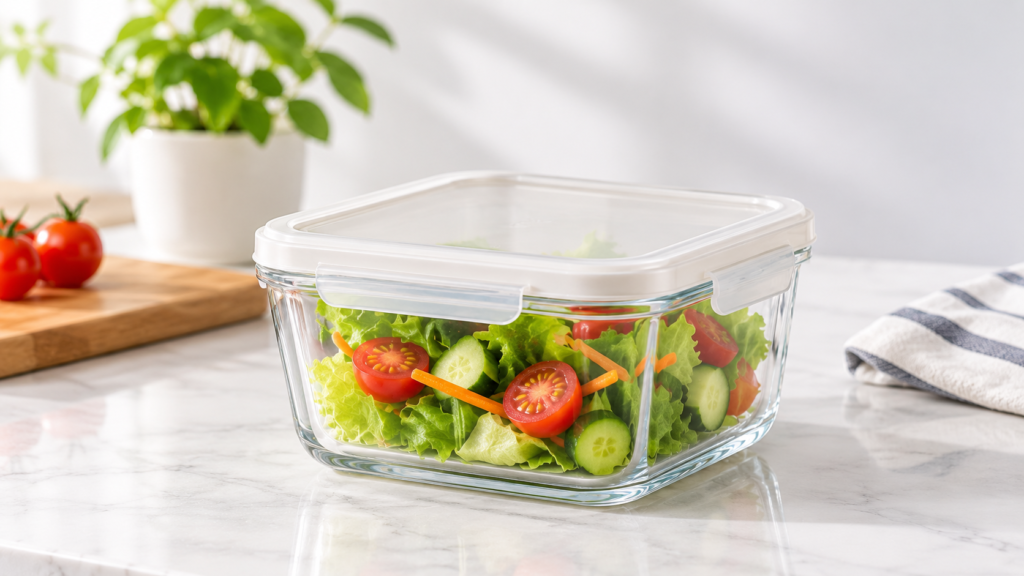
Glass food storage bowls offer a simple way to organize everyday food while keeping contents visible. A clear finish and practical bowl shape help buyers compare designs for prepared ingredients and leftovers. Select capacity and dimensions from a measured sample rather than assuming that the pictured design is available in every size.
For kitchenware brands, retailers and importers, a well-designed glass storage bowl is also an opportunity to combine everyday functionality with a clean, consistent product appearance.
1. Why Choose Clear Glass for Food Storage?
Transparency is one of the most practical features of clear glass storage bowls. Users can identify stored food without opening the container, making it easier to organize ingredients and check what is available in the refrigerator or kitchen.
Clear glass also has a neutral appearance that fits different kitchen styles. Unlike strongly colored containers, it does not visually compete with the food inside or limit the product to a particular interior design.
For brands, this understated appearance offers flexibility in product positioning. Clear glass bowls can be included in everyday kitchenware collections, food storage ranges or coordinated household product sets.
2. A Medium-Size Bowl for Everyday Storage
A medium-size glass bowl provides a useful balance between storage capacity and handling convenience. It can be suitable for storing prepared ingredients, fruit portions, side dishes and leftovers, depending on the final dimensions and capacity.
The actual capacity should be selected according to the intended market and application. For example, a retail range may include several bowl sizes to accommodate different household needs, while a single-size collection may focus on a specific storage purpose.
When developing a glass food storage bowl, buyers should consider:
- Capacity: How much food should the bowl hold?
- Diameter and height: Do the proportions suit the intended food and storage space?
- Bowl shape: Is the opening wide enough for convenient filling and cleaning?
- Weight: Is the finished product comfortable to handle?
- Closure compatibility: Does the selected lid fit the bowl securely?
These details should be confirmed through product drawings and physical samples before mass production.
3. Matching Lids and Accessories
A glass storage bowl is often developed as a complete product rather than a standalone glass component. The lid and other accessories influence its appearance, usability and retail positioning.
When selecting a matching closure, buyers should confirm the material, shape, dimensions and fitting method. The lid should be evaluated together with the actual bowl sample because small differences in dimensions can affect the fit.
For brands developing a coordinated kitchenware collection, matching closures across different bowl sizes can also help create a consistent product appearance.
It is important not to assume that every glass storage bowl is airtight, leakproof or suitable for every temperature condition. These functions depend on the bowl design, closure construction and material specifications, so they should be tested and confirmed before being used in product claims.
4. Customization Options for Glass Food Storage Bowls
A clear glass bowl provides a flexible starting point for customized kitchenware. Depending on the project, buyers can discuss several design and production details with the manufacturer.
| Customization area | What buyers can consider |
|---|---|
| Capacity and dimensions | Bowl volume, height and diameter |
| Glass design | Shape, proportions and wall structure |
| Surface decoration | Requested artwork and finish, with process feasibility confirmed on samples |
| Closure | Matching lid material, shape and fitting |
| Packaging | Protective inserts, cartons and retail presentation |
Decoration should be selected according to the product’s intended use. For example, a simple clear finish supports a minimalist appearance, while printed branding can help establish a recognizable identity for a retail collection.
Any decoration applied to food-contact products should be reviewed for its intended application and relevant market requirements.
5. What Buyers Should Check Before Ordering
Before placing a bulk order, buyers should evaluate the complete product rather than focusing only on its appearance.
A practical inspection process should cover:
- Dimensions and capacity: Check whether the sample matches the approved specifications.
- Glass appearance: Review transparency, color consistency and visible surface defects.
- Shape consistency: Compare the bowl’s height, diameter and overall proportions.
- Closure fit: Check how the lid fits and whether it can be opened and closed as intended.
- Decoration quality: Inspect logo position, color and finish consistency if decoration is included.
- Packaging protection: Confirm that the packaging helps prevent movement and glass-to-glass contact during transportation.
For export orders, packaging should receive particular attention. Glass products are fragile, so suitable protective materials and carton arrangements are important parts of order preparation.
6. Prepare a Glass Food Storage Bowl Enquiry
When contacting Qunyi Glass, identify the container design you want to discuss and ask for its available dimensions, glass specification and lid options. The linked product below shows rectangular containers; use the photographs to select a design, then confirm its details in a drawing or physical sample.
For a new shape or branded finish, request a written feasibility review covering tooling, decoration, lid sourcing, inspection and packing. Ask which operations and accessories are included in the quotation and how the final sample will be approved.
For a custom project, it is helpful to prepare the target capacity, preferred dimensions, closure requirements, estimated order quantity and destination market before requesting a quotation.
Frequently Asked Questions
How should buyers confirm capacity and dimensions?
Request the nominal capacity, fill level, outside dimensions and lid dimensions for the selected design. If a different size is needed, ask whether an existing design is available or whether new tooling would be required.
How should a matching lid be selected?
Evaluate the proposed lid on the exact bowl sample. Confirm material, opening method, dimensions and replacement availability, then agree which fit or sealing checks apply to the intended use.
What should be checked before adding branding?
Provide artwork and identify the proposed decoration area. Ask the supplier to confirm process availability, appearance and suitability for the intended cleaning and handling conditions before approving a decorated sample.
What should buyers provide when requesting a quotation?
Useful information includes target capacity, dimensions, closure type, decoration requirements, estimated order quantity and destination market.
A practical glass food storage bowl should balance appearance, capacity, closure compatibility and transportation protection. By confirming these details during product development, brands can build a kitchenware product that meets their market requirements.