

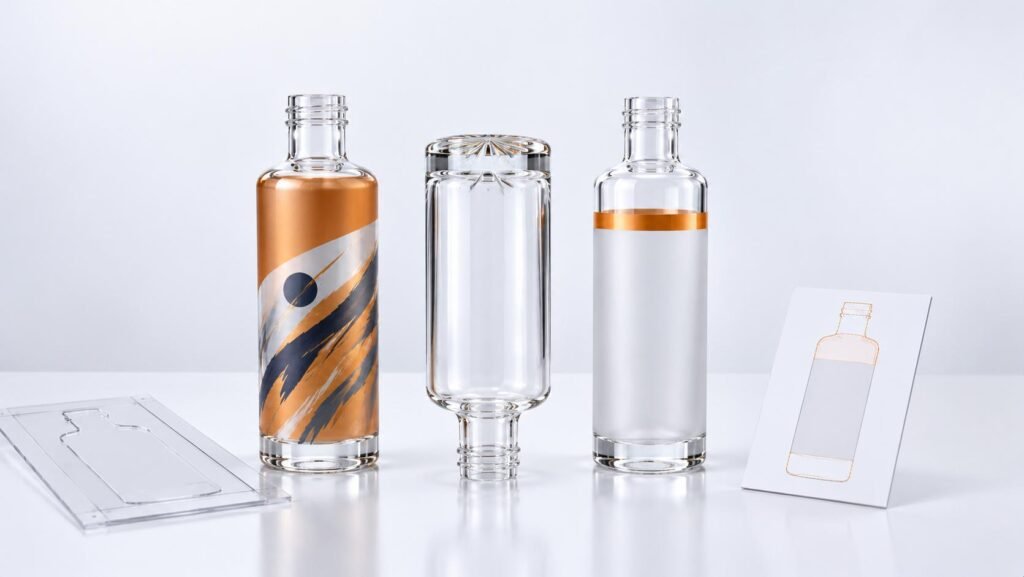
Choosing where a decoration program runs is a bigger decision than choosing the finish itself, because the factory determines whether the approved sample, the bulk batch and the reorder all describe the same bottle. Deep processing capability is not one machine; it is the range of processes under one roof, the glass knowledge behind them, the quality system that checks them and the records that protect the next order. This guide explains how to evaluate a glass bottle deep processing factory across those four areas, what to verify on site or in documents, and which answers should raise questions.
1. What Separates a Deep Processing Line from a Decorator’s Workshop
A decorator’s workshop applies finishes to bottles it buys from elsewhere; a deep processing factory controls the bottle and the finish together. That control matters at the moments buyers never see: a coating cure schedule set for the actual wall thickness of the format, an engraving fixture cut for the true shoulder curve, a decal firing planned around the glass composition. When the bottle and the decoration come from different hands, every one of those decisions becomes a phone call between two suppliers.
The practical test is simple: ask how the supplier verifies that a proposed finish fits the exact bottle format. If the supplier also forms the glass, request relevant production records; if forming is outsourced, ask how the two parties control changes between sample approval and the production order.
2. Capability One: Range of Processes Under One Roof
Combined programs are where process range stops being a convenience and becomes a quality factor. Spray coating, frosting, silk-screen printing, hot stamping, decal firing and engraving each need their own equipment, consumables and skilled operators, and the sequence between them needs one production plan. A factory that runs all six in-house reviews the combined artwork as a single layout and sequences the processes itself; a buyer assembling three subcontractors inherits the coordination risk.
| Evaluation Area | What to Verify |
| Process range | Spray, frosting, printing, stamping, decal firing, engraving run in-house, not brokered |
| Glass knowledge | Own forming lines; wall-thickness and annealing control behind the decoration |
| Quality system | Current quality-system scope and product-specific test reports or declarations for the intended use and destination |
| Sample discipline | First-off samples on production bottles; retained samples kept with batch records |
| Scale and stability | Production lines, staff, site size, export footprint across markets |
| Record keeping | Layered artwork, films, masks, fixtures and inspection results stored per program |
3. Capability Two: Glass Knowledge Behind the Decoration
Decoration failures often trace back to the bottle, not the booth: a wall too thin for a deep cut, an annealing curve that leaves surface stress a coating later magnifies, a shoulder curve that makes the proofed position drift. A factory that forms its own glass carries this knowledge in-house and adjusts the bottle or the process before the sample, which is why the same finish can behave differently at two suppliers using the same bottle drawing.
Buyers can verify this without a laboratory: ask how the factory handled a format with a difficult curve or a thin wall, and listen for answers about fixtures, cure schedules and test bottles rather than assurances about workmanship. Factories that test on the production format — not on a similar jar — are the ones whose samples survive contact with the batch.
4. Capability Three: Quality Systems and Certifications
Ask for current, product-specific evidence rather than a general list of certifications. A quality-management certificate may describe the scope of a management system, while test reports and declarations apply to particular materials, uses and destination markets. Confirm the issuing organization, validity, covered product and intended application before relying on any document.
Documents should be supported by in-process checks. Buyers can ask how colour, position and finish adhesion are measured against an approved sample, how often checks are performed and where results are recorded. Request a sample record for the proposed process before approving bulk production.
5. Capability Four: Records That Protect the Reorder
The truest test of a deep processing factory is the second order. Repeat quality depends on records: the layered artwork, the films and masks, the fixtures, the approved retained sample and the batch inspection results. A factory that keeps all of them repeats an approval in days; a factory that kept only the invoice starts the program over and hopes the result matches.
For a repeat order, ask the supplier to identify the approved reference sample, artwork version, process settings and inspection records. Confirm what information will be retained and how changes will be approved before treating a later batch as a repeat of the first.
6. Questions to Ask During a Factory Review
A short list separates capable factories from confident ones: Which processes run on your own floor? Can the sample be made on the production bottle? What is checked during bulk production, and where is it recorded? Which certificates cover the destination market? What happens to the artwork and fixtures after shipment? Factories that answer with documents and retained samples are safe to brief; factories that answer with speed and price alone should be asked the same questions again, in writing.
7. Red Flags in a Factory Review
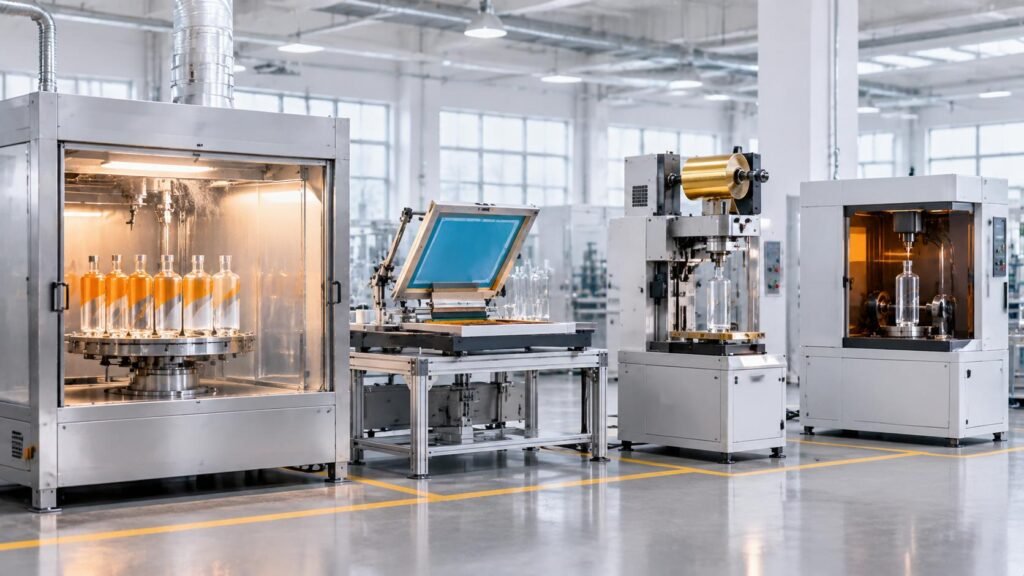
Some answers deserve more caution than others. A supplier who cannot say which processes run on its own floor is brokering, not processing. A sample offered on a different bottle format than the one ordered hides the interaction between glass and finish that the program depends on. Certifications shown for markets the program does not target, while the target market’s documentation is missing, suggests paperwork collected for show rather than for compliance.
The most expensive red flag is silence about records: no retained samples, no batch files, no answer to what happens to the artwork after shipment. That supplier can deliver a good first order and still fail the repeat, because everything that made the first batch match the sample lived in memory rather than in files. A factory review that walks the floor, the retained-sample room and the records turns these flags into facts before the order is placed.
8. FAQ
Q1: What should buyers verify about process range in Xuzhou, Jiangsu, China?
Ask the supplier which finishing steps are performed at its own facility and which are subcontracted. For a combined finish, request a process sequence and sample on the intended bottle before approving the production plan.
Q2: Why does owning the bottle matter for decoration quality in Xuzhou, Jiangsu, China?
Ask who forms the bottle and who applies the decoration. If different suppliers are involved, confirm how dimensions, surface condition and sample approval are handed over between them.
Q3: Which certifications are relevant for decorated bottles in Xuzhou, Jiangsu, China?
Request current documents relevant to the intended bottle, contents and destination market. Check the issuer, scope and product covered; do not assume that a general certificate proves suitability for a specific application.
Q4: How can buyers test sample discipline in Xuzhou, Jiangsu, China?
Request a first-off sample on the intended production bottle and ask whether an approved reference sample can be retained. Confirm the sampling and record-keeping process in writing.
Q5: What records should a factory keep after shipment in Xuzhou, Jiangsu, China?
Ask what artwork files, masks, fixtures, reference samples and inspection results the supplier will keep for reorders, and who controls revisions after shipment.
Q6: Does scale affect decoration consistency in Xuzhou, Jiangsu, China?
Request current capacity and lead-time evidence for the proposed finish and order size. A site-size or staff figure alone does not establish capacity for a specific decoration process.
Q7: Can buyers audit the factory in Xuzhou, Jiangsu, China?
For a supplier review, ask which decoration steps, sample records and inspection checks can be demonstrated for your specific order. Contact Qunyi Glass to discuss the requirements.
Q8: What is the fastest sign of a capable deep processing factory in Xuzhou, Jiangsu, China?
Ask for examples of process plans, proofs and inspection records that apply to the proposed order. Written evidence and an approved reference sample provide a more reliable basis for repeat production than a general promise of consistency.
Disclaimer: This article provides general guidance on evaluating glass bottle deep processing factories only. Capability details, certifications, production scale, minimum order quantities and quotations vary by supplier and should be verified during a factory review. Contact Qunyi Glass with your bottle specifications and decoration requirements.