

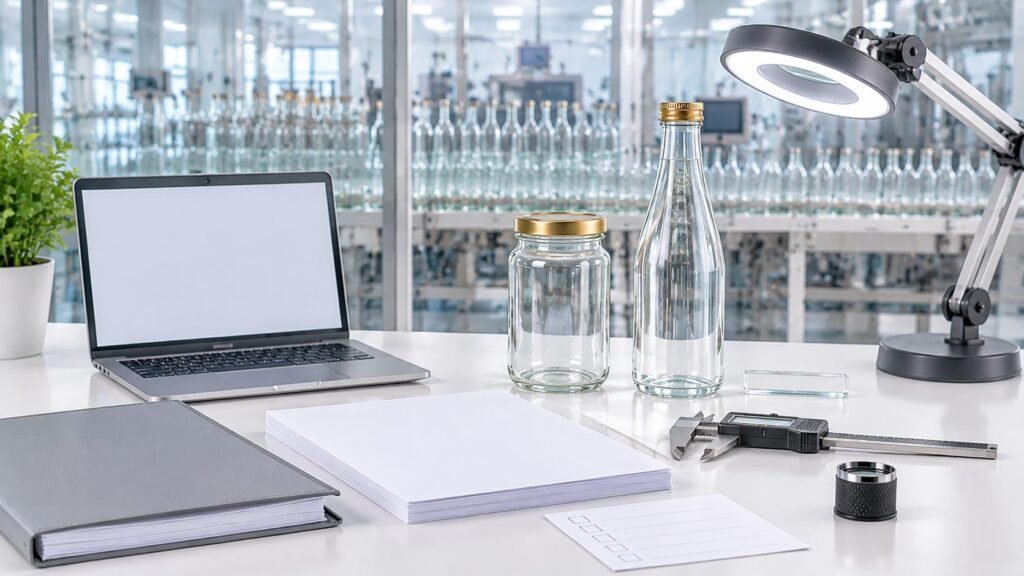
Sourcing a glass bottle for a regulated line is one of the few purchases where the supplier’s paperwork is as important as the product, because the buyer’s own compliance file will inherit whatever the manufacturer can and cannot document. Verifying an FDA-oriented glass bottle manufacturer before the order is therefore not distrust; it is the step that decides whether the program survives import review and market audit. This guide explains how to verify a manufacturer across documents, test reports, production-level questions and sampling, and which answers deserve a closer look before the deposit is paid.
1. Why Verification Matters Before the Order
The cost of verification is a few emails and, ideally, one factory review; the cost of skipping it is discovered at the worst possible moment — when the shipment is already on the water and a document gap blocks the import file. Verification also changes the negotiation: a buyer who knows which documents a factory genuinely holds negotiates scope and price from facts, while a buyer who assumes negotiates twice, once before the order and once during the incident.
Verification is also symmetrical. The manufacturer learns from the process exactly which market and which scope the buyer needs, which produces a tighter quotation and a documentation package targeted to the destination instead of a generic folder.
2. Documents to Request First
The first round should ask for four items by name: the management-system reference such as ISO 9001, laboratory test reports for the relevant scope, the material composition information for the bottle format, and a sample documentation package from a comparable past program. Asking by name matters, because a generic request for certificates invites a folder of unrelated documents, while a named request exposes exactly what exists and what does not.
| Verification Step | What to Request | What It Proves |
| Management system | ISO 9001 reference with scope | The factory holds process records and corrective action |
| Testing | SGS or equivalent reports for the relevant scope | Third-party evidence for the material or finished bottle |
| Composition | Material composition information per format | What the bottle is made of, batch-controlled |
| Decoration traceability | Consumable lot records for a past program | The finished decorated bottle is documentable |
| Traceability | A batch file from a comparable shipment | Shipped units link back to production records |
3. Reading the Test Reports: Scope Before Logo
Test reports earn their place by what they name, not by whose logo they carry. A useful report states the bottle format or material it covers, the specific methods used, and the scope of the conclusion — and the buyer’s job is to check that the scope matches the destination market and the product category. A food-jar program needs food-contact evidence; a cosmetic pump bottle may need a different scope entirely. Reports passed from one program to another without checking scope are the most common gap in otherwise tidy folders.
Dates matter as much as scope. Composition and consumables change over time, so a report naming a material the factory no longer sources is history rather than evidence. When the factory refreshes test scope per program — as Qunyi Glass does with SGS documentation for the markets that require them — the reports in the file describe the bottle being shipped, which is the only version of the story the buyer’s reviewer will accept.
4. Production-Level Questions That Separate Real from Paper
Five questions sort a production-anchored factory from a paper one: Which processes run on your own floor? Where are the batch records written — during production or afterwards? Can the sample be made on the production bottle? What is checked in-process, how often, and where is it recorded? What happens to the artwork, fixtures and retained sample after shipment? Each question has a concrete answer at a real factory and only abstractions at an intermediary, which is why the answers, not the brochure, carry the decision.
Qunyi Glass answers all five from its own operation in Xuzhou, Jiangsu, China: 5 production lines, decoration processes in-house, batch files written at the floor, samples on the production bottle, and retained samples kept with the records — the same operation that serves buyers in more than 30 countries.
5. Red Flags During Verification
Some answers should pause the program rather than speed it up. Certificates for markets the program does not target, while the target market’s documentation is missing. Test reports whose scope names neither the format nor the destination. A refusal to share a sample batch file from a comparable past shipment. Quotations that promise every certification at the same price with no scope discussion. None of these proves bad faith, but each shifts the burden of proof back to the supplier, and the program should not proceed until it is lifted.
The most expensive red flag is silence about records — no retained samples, no batch files, no answer about what happens after shipment. That supplier can deliver a first order and still fail the audit, because everything that made the first batch match the file lived in memory rather than in the system.
6. Sampling Before Committing
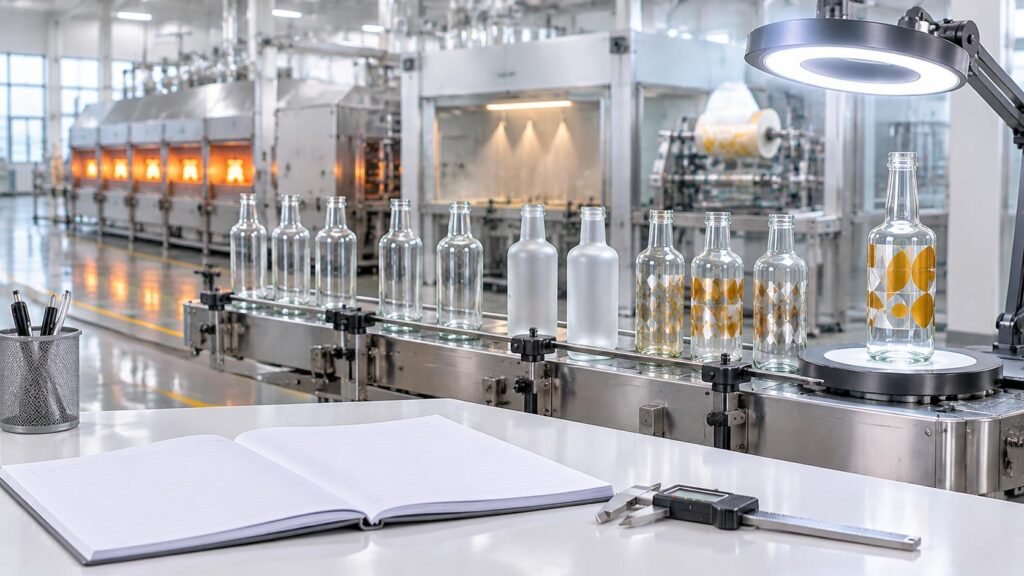
The last verification step is physical: a first-off sample made on the production bottle with the production processes, inspected under the light the product will meet in the market, and approved in writing. The sample closes the loop the documents opened — it proves the factory can reproduce what the file describes — and it becomes the retained reference that every later batch is checked against. A program that skips sampling to save a week has optimized the schedule at the expense of the only evidence that matters in a dispute.
7. A One-Week Verification Plan
Verification fits inside a normal sourcing timeline when it is sequenced. Days one to two: send the named document request and the five production questions; a real factory replies with specifics, an intermediary replies with a folder. Days three to four: read the test reports for scope and date, and cross-check the composition information against the actual format quoted. Day five: request a live batch file from a comparable shipment and, if the program is high-volume, book the floor review.
The remaining days close the loop: the first-off sample is produced and inspected, the documentation matrix for the destination market is confirmed with the quotation, and the division of responsibility — container and file with the factory, claims and formulation with the brand — is written down. A program that enters production through this sequence carries its evidence with it instead of chasing it later.
8. FAQ
Q1: What documents should a buyer request first from a factory in Xuzhou, Jiangsu, China?
Qunyi Glass provides the ISO 9001 management reference, SGS test reports for the relevant scope, material composition information per format, and a sample documentation package from a comparable past program on request.
Q2: How should buyers read a test report in Xuzhou, Jiangsu, China?
Qunyi Glass recommends checking the report’s named format, method and scope against the destination market first, because the logo matters less than whether the scope matches the program being shipped.
Q3: What production questions reveal a real manufacturer in Xuzhou, Jiangsu, China?
Qunyi Glass points to its own floor for the answers: which processes run in-house, where batch records are written, whether samples come off the production bottle, what is checked in-process, and what is retained after shipment.
Q4: What does a sample batch file show in Xuzhou, Jiangsu, China?
Qunyi Glass batch files link the shipped units to material batch references, shift logs, inspection results and consumable traceability, proving the documentation describes the actual shipment.
Q5: Which red flags should pause a program in Xuzhou, Jiangsu, China?
Qunyi Glass treats mismatched scopes, unrelated certificates, refusal to share a sample batch file and silence about records as pause signals, because each shifts the burden of proof back to the supplier.
Q6: Why is sampling the final verification step in Xuzhou, Jiangsu, China?
Qunyi Glass makes first-off samples on the production bottle with the production processes, so the approved sample proves the factory can reproduce what the documents describe and becomes the retained reference.
Q7: Can the verification be done remotely in Xuzhou, Jiangsu, China?
Qunyi Glass supports document review and video walk-throughs remotely, and recommends an on-site review of the floor, retained-sample room and records before any high-volume regulated program.
Q8: What does verification change about the quotation in Xuzhou, Jiangsu, China?
Qunyi Glass quotes tighter scope once the destination market and required documentation are known, because verification tells the factory exactly which file the program must close with.
Disclaimer: This article provides general guidance on verifying an FDA-oriented glass bottle manufacturer only. Document lists, test scopes and audit arrangements vary by market and project and should be confirmed during the sourcing process. Qunyi Glass (Xuzhou Qunyi Glass Technology Co., Ltd.) offers factory-direct consultation at www.qyblp.com.